
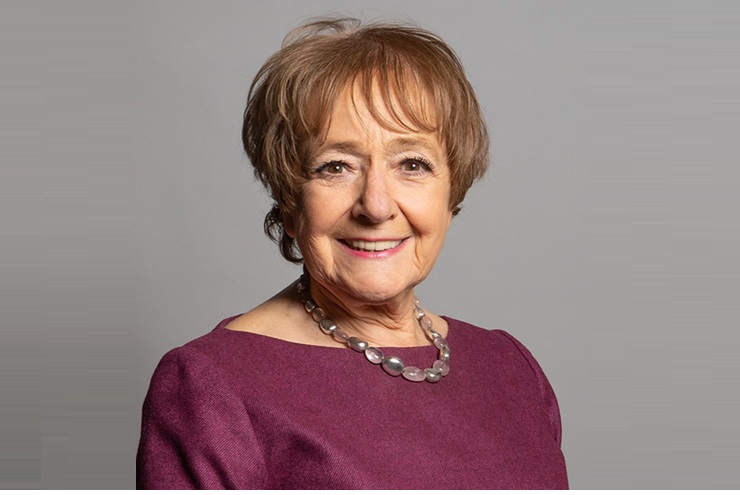
Baroness Hodge (Image: Richard Townshend)
The recommendations made by Baroness Margaret Hodge’s independent review of the activities of Arts Council England (ACE) will has been welcomed by those who have long held the belief that the body has been in urgent need of a comprehensive overhaul.
Published on the 19th December, they were numerous and hard hitting – although the primary statement that the UK Government should retain the organisation, although only by rigorously maintaining an ‘Arm’s Length Principle’ to protect it from what she referred to as “politicisation” will have come as a relief to its supporters.
Challenges
What it all means for the future of the two main brass band organisations – Brass Bands England and the National Youth Brass Band of Great Britain, that receive annual funding through ACE, we will have to wait and see.
Challenges will remain before it is fully implemented. The government response comes in the New Year, with Culture Secretary Lisa Nandy initially stating that it, “sets out recommendations to strengthen support for artists, reach communities more effectively, and ensure that creativity is accessible to all."
Let's Create did not live up to its slogan...
Cause for hope
However, a report which bluntly states that ACE had sidelined artistic excellence to “change society” and was widely seen as “stifling artistic innovation and creativity”, does give cause for hope. So too the acceptance that its flagship ‘Let’s Create’ strategy introduced in 2020 and due to run until 2030, should be replaced by something new and “less prescriptive”.
However, a report which bluntly states that ACE had sidelined artistic excellence to “change society” and was widely seen as “stifling artistic innovation and creativity”,
Review feedback from stakeholders stated that ACE was, 'pursuing access to culture in an instrumentalist way and had lowered the priority given to the pursuit of artistic excellence. Art and excellence were sidelined'.
Those critics have not been alone.
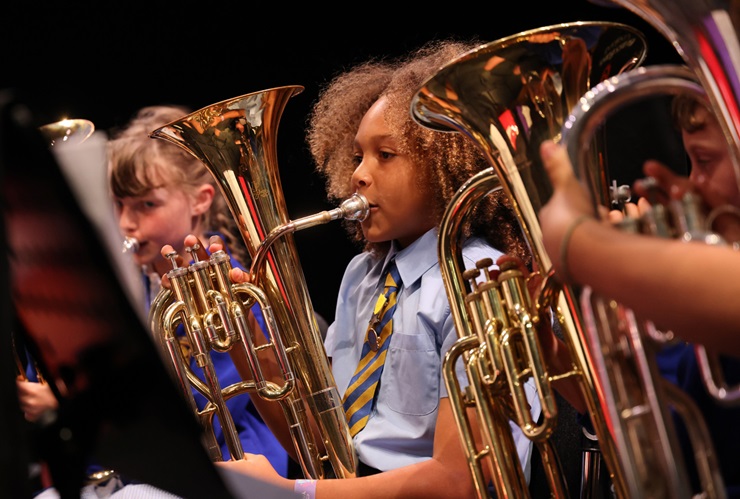
BBE has already been succesfully implementing 'Let's Create' strategies and ambitions into its work
Demise
A festive cheer then is sure to be heard that ‘Let’s Create’s’ demise should be accompanied by the end of the bureaucratic slog of meeting a multitude of tick-box requirements through its now defunct on-line Grantium application process.
Both Brass Bands England (as an ACE Investment Principles Support Organisation) and The National Youth Brass Band of Great Britain (as a National Portfolio Organisation), have proactively integrated the ‘Let’s Create’ strategy into their work, the results of which have been clear to see – ambition and quality, dynamism, environmental responsibility, inclusivity and relevance.
However, they also spent untold hours reminding ACE they did just that anyway thanks to good leadership and visionary ambition.
However, they also spent untold hours reminding ACE they did just that anyway thanks to good leadership and visionary ambition (look at the success of the National Youth Championships).
Although both would have had close ties to ACE representatives they still had to repeatedly tick needless boxes in the various tedious application funding processes.
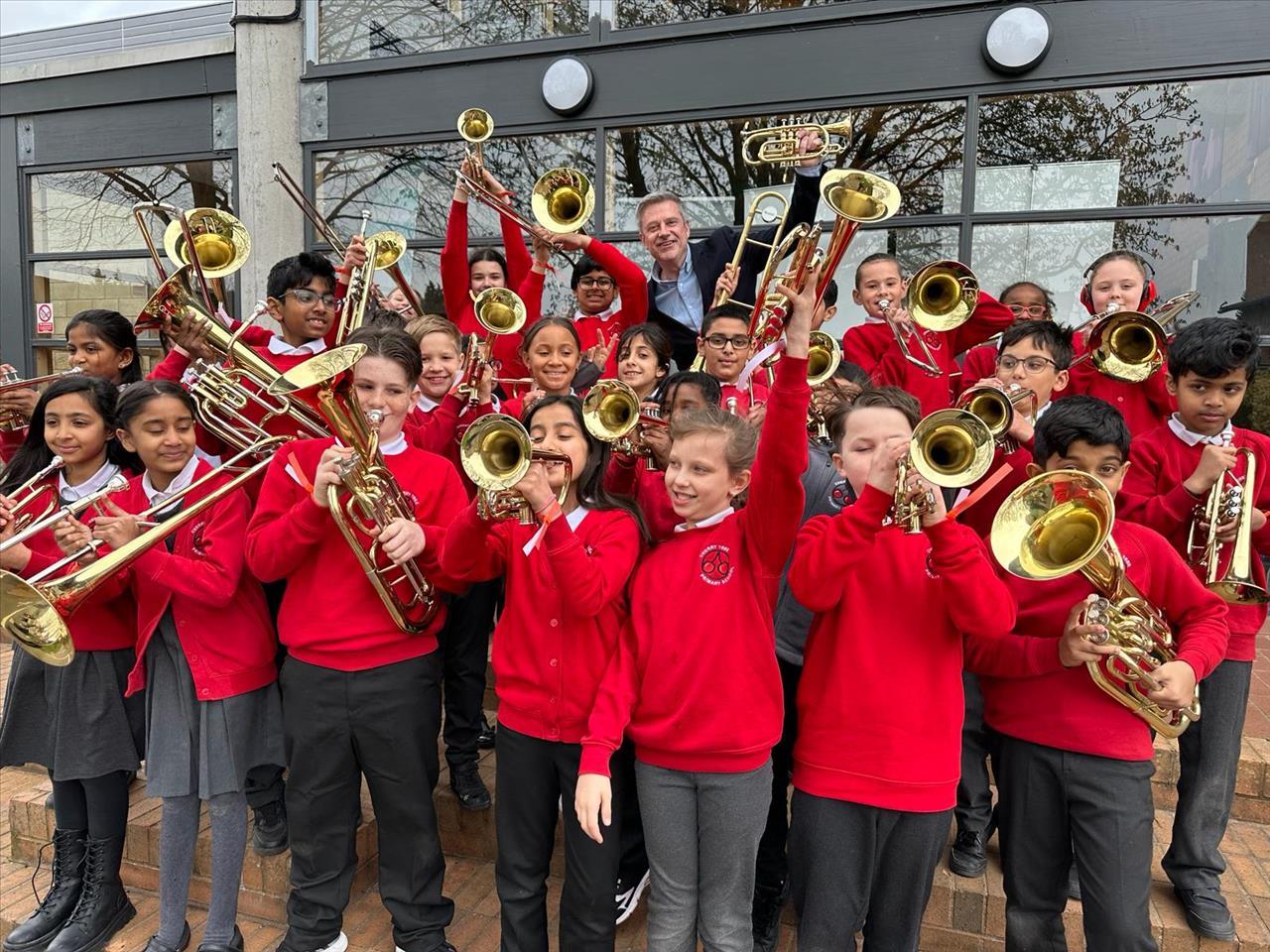
National success: BBE did not need to waste its time repeating the tick boxes required by Let's Create
Fine line
Over the past few years BBE and the NYBBGB have trodden a fine line with both their overall and specific aims and objectives to meet what The Daily Telegraph (no fans of ACE it must said), said in 2020, ‘wasn’t a serious arts policy for a serious Arts Council’ - more ‘an anti-elitist witch hunt flying under the banners of inclusivity and diversity’.
The Daily Telegraph (no fans of ACE it must said), said in 2020 ‘wasn’t a serious arts policy for a serious Arts Council’ - more ‘an anti-elitist witch hunt flying under the banners of inclusivity and diversity’.
Now ‘Let’s Create’ is to be replaced by a much simpler ambition of, “excellence for all that allows each organisation or individual to apply according to their strengths and the unique contribution they can make to delivering a vibrant and innovative creative sector”.
It signals an overdue end to the Kafkaesque bureaucratic ‘one size fits all’ approach.
Tick box approach
That they have done it so well is testament to the informed outlook and sheer hard work of both organisations, although as BBE has found out, the cost of doing so even with an ACE grant of over £400,000 a year has been difficult to say the least.
In many ways BBE has been held hostage to their grant fortune success in meeting outcomes on certain projects that then offer little long-term reality of extended financial investment when set against ones that so obviously do – from its award-winning Elevate Project (currently paused) to its Brass Foundation work (which BBE had to make redundancies from).
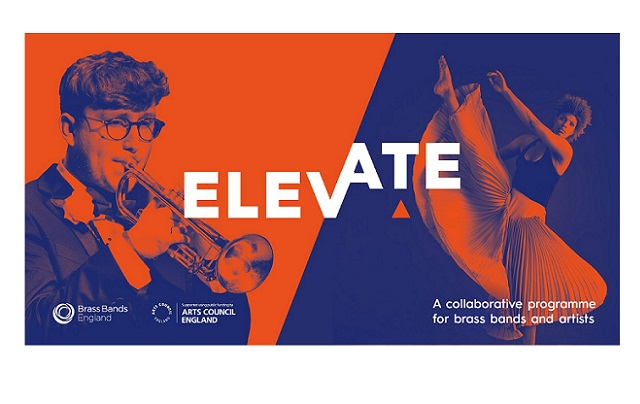
The Elevate programme was a critically acclaimed success, but funding has not been prolonged
Arguably it has been the same for the NYBBGB, (which gets around £120,000 a year) with its additional outreach work and inclusion initiatives heavily aided by the outstanding efforts of its successful fund raising team – from its Bursary Scheme to the recent partnership with the Victoria Wood Foundation.
Highest quality standards
Both Mark Bromley, the CEO of the NYBBGB, and whoever takes the CEO reins at BBE in 2026 will be heartened then that the report states that a “completely new model” for funding NPOs should now be employed.
A new financial cycle extended from three years to five is recommended, with organisations which meet the ‘highest quality standards’ receiving at least 80% of their funding in the next round.
Both Mark Bromley, the CEO of the NYBBGB, and whoever takes the CEO reins at BBE in 2026 will be heartened that the report states that a “completely new model” for funding NPOs should now be employed.
Excellence has seen the NYBBGB and Children's Band increase its audience reach
In doing this, the report essentially undermines a core tenet of ACE’s current strategy – that every organisation it gives money to is somehow equal.
The reintroduction of Regional Panels to strengthen focussed decision making may be a return of a policy from decades gone by – but it worked.
The reintroduction of Regional Panels to strengthen focussed decision making may be a return of a policy from decades gone by – but it worked.
This is also good news for two organisations who have long tried to strengthen their outreach into all areas of the country.
Giving and tax incentives
In addition, Baroness Hodge recommended that “new ways of responding urgently to the underfunding that has undermined the arts over the last decade”, should be made based on philanthropic giving and tax incentives.
A £250m endowment fund for ACE structured in a way that levers philanthropic giving, with ACE raising £1 for every £1 they receive through the endowment, as well as new tax incentives much like the French Aillagon Law should be employed, “to encourage corporate giving outside London.”
NYBBGB's funding team has been succesful in securing grants for initiatives
Under the Aillagon law, which came into force in 2003, companies that invest in culture can claim up to 60% in tax breaks for cultural philanthropy.
This may sound as if big companies and the uber-rich may simply put money into well-known arts bodies and orchestras, but the report also recommends that the Department for Education and DCMS should work together on a specific project with philanthropists, trusts and foundations to create a joint fund aimed at improving the cultural offer in schools.
Once again, these are areas that both BBE (which recently reported significant challenges in gaining successful grant applications) and NYBBGB (which has boosted its success in raising funds in recent years) can now explore with renewed confidence and backing.
Once again, these are areas that both BBE (which recently reported significant challenges in gaining successful grant applications) and NYBBGB (which has boosted its success in raising funds in recent years) can now explore with renewed confidence and backing.
Individual support
Interestingly, the report also spotlights individual artists with the recommendation of the introduction of, “a new National Programme for individuals, to support emerging and mid-career individuals to ensure a diverse talent pool by providing individuals with funding of around £30,000 per year and mentoring support”.
It may sound a little vague, but the possibility of supporting individuals in the banding movement could arise - from soloists to composers etc.
As one leading director said in The Arts newspaper; “…the ACE review offers a fair assessment of the system and a clear representation of what is needed: stripping back unnecessary bureaucracy and investing directly in individual artists.”
As one leading director said in The Arts newspaper; “…the ACE review offers a fair assessment of the system and a clear representation of what is needed: stripping back unnecessary bureaucracy and investing directly in individual artists.”
Local authority strategies
Of even more interest is the recommendation that the government consider creating a statutory duty for local government to prepare a cultural strategy every 5 years which should encompass the arts, culture, and heritage. Brass bands must ensure they are to play a part in that.
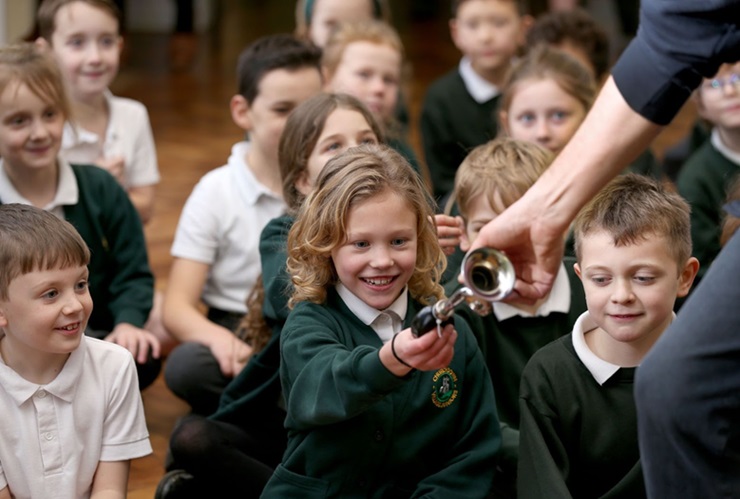
Both BBE and the NYBBGB has reached out into schools to inspire the next generations of players
Funding challenges ahead
Although the Hodge report has been broadly welcomed by representatives of the wide spectrum of political parties, the press and cultural bodies, some concerns still exist – chief amongst them, where is the money coming from to pay for what is hoped to be a regenerated arts sector.
Applications for 2026/2027 funding start in January. It is likely to see a one-year extension on current levels with perhaps a 1.5% increase in allocations. 15 years of underfunding of the Arts have come at one heck of a price in comparison to our European counterparts.
15 years of underfunding of the Arts have come at one heck of a price in comparison to our European counterparts.
As the report says: “In just one state in Germany, Berlin, The Senate Department for Culture and Europe allocates around €600 million (£525 million) annually to cultural funding - more than the combined annual budgets of Arts Council England for the National Portfolio (£458.5m per annum [2023-26]) and the Mayor of London’s culture programme (£18.7m in 2024-25)."
Heads should roll
So whilst the Arts Council England response to the report says it was “encouraged” and “energised” to go further “in our support for artists, to search for new sources of funding for the arts, and to do more to grow the cultural offer for audiences, particularly in places that historically have been underserved,” you really wonder if they do have the desire to do just that after the various debacles they oversaw in much of their stewardship over the last few years.
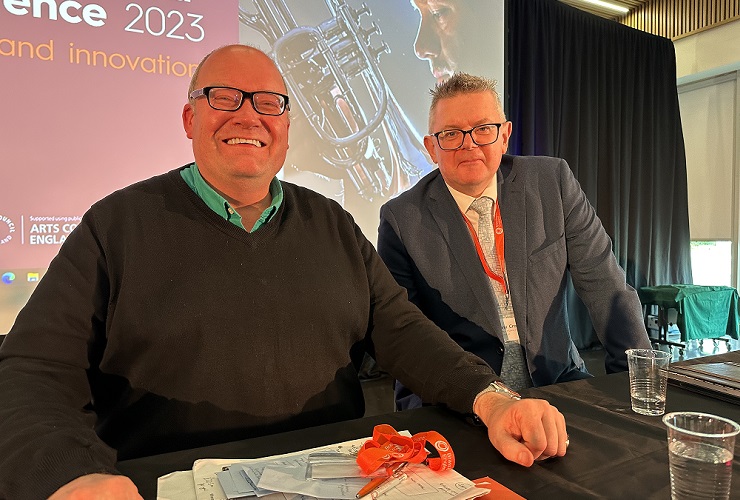
Darren Henley (left) will now face pressure on his job
Humiliated
As The Daily Telegraph’s Classical Music correspondent Ivan Hewett stated: “The Arts Council has been totally humiliated - heads should roll. Baroness Hodge’s report has sensibly demolished ACE’s bewildering strategy. Now the real work begins.”
“The Arts Council has been totally humiliated - heads should roll. Baroness Hodge’s report has sensibly demolished ACE’s bewildering strategy. Now the real work begins.”
Which for brass bands leads us to ACE Chief Executive Darren Henley, whose response to the report was: “We want people to spend less time on our paperwork and more time on their creative work. Our mission over the months to come is to roll up our sleeves and make that happen”.
That for many has been bleeding obvious for far too long.
Those who remember his patronising self-help homilies and meaningless aphorisms that came with his 2020 BBE key-note address, as well as his ‘word salad’ responses to question at the 2023 BBE Conference (above), may wonder if it would be good for banding and the wider arts sector if he is not to be kept in post to oversee the brave new future outlined by Baroness Hodge.
Perhaps it should also have also been one of her recommendations.
Iwan Fox