
The largest participatory brass band competition in the world will once again take place over four weekends in March.
Although numbers have reduced over the years (from 577 competitors in 1992 to 478 in 2025) the Regional Championships still represent a remarkable endorsement of a nationwide competitive musical hobby. Today, many people are concerned about its viability, yet despite its varied challenges it remains the bedrock of the banding movement in the UK.
Collapse
Strange to think then that sixty years ago, in 1966, it almost collapsed amid rancour.
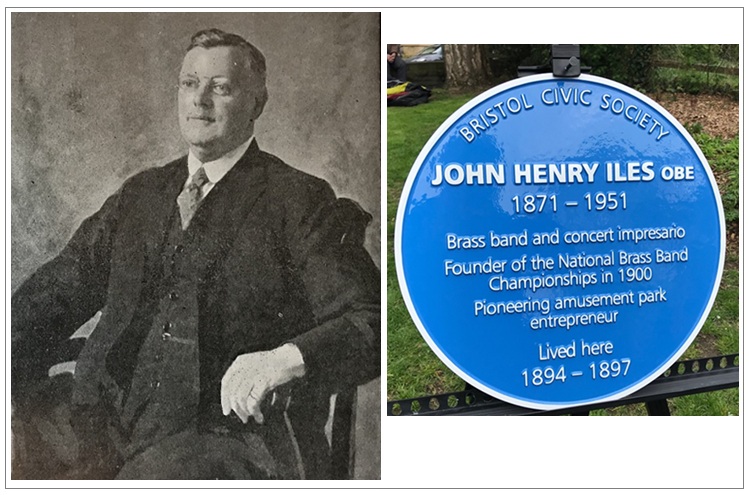
It was not until after the Second World War that a true nationwide National Championship was established. Before then the gargantuan event run by John Henry Iles (below) at Crystal Palace did not have any geographical qualification ethos.
Strange to think then that sixty years ago, in 1966, it almost collapsed amid rancour.
Instead, bands chose to enter based on a criterion of cash values. For instance, the Third and Fourth Sections were limited to those who had not won a prize exceeding £15 or £6 in the past year. It worked only to the extent that the very best bands entered at the highest levels were usually those who had won the most financially lucrative ‘local’ contests.
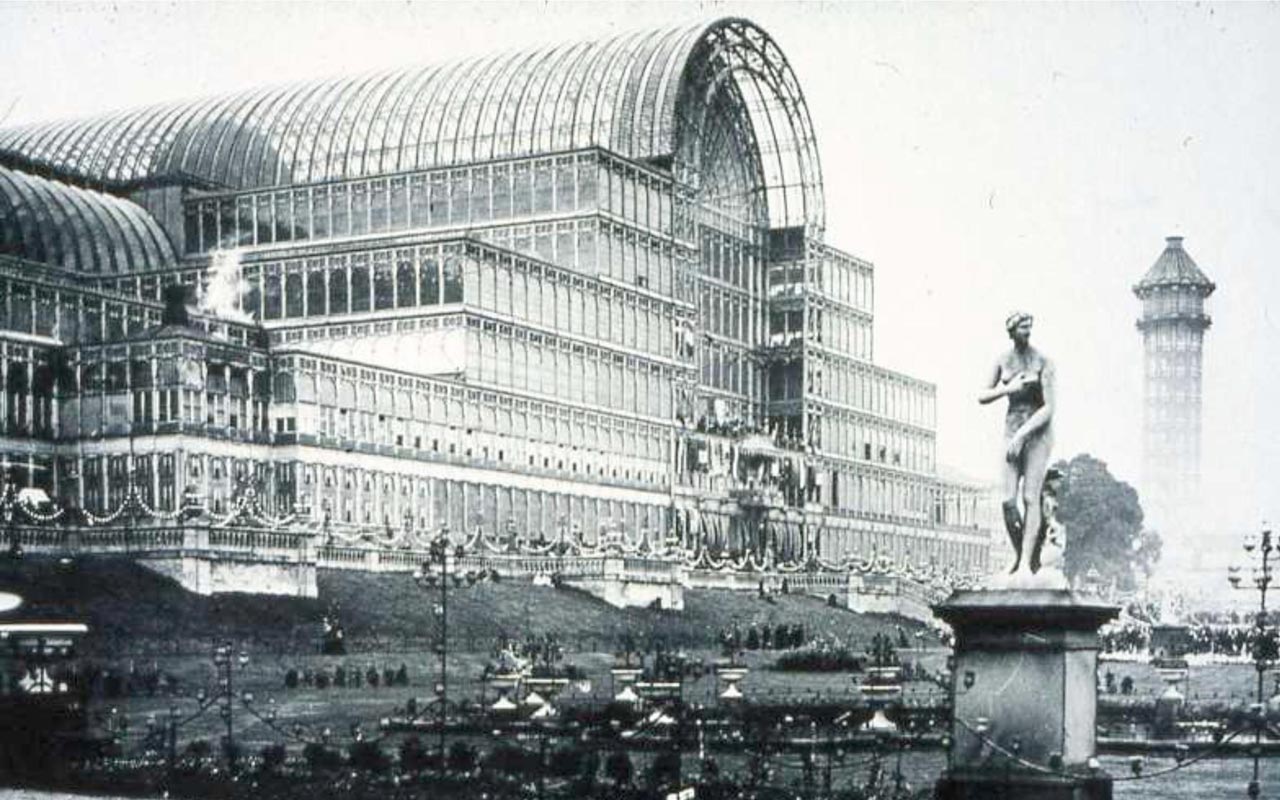
The Crystal Palace stood until 1936 as the home to the National Championships
The Second World War (as well as the 1936 fire that destroyed the Crystal Palace) changed everything. Iles could no longer afford to run the contests and agreed to hand over the event. In early 1945, Edwin Vaughan Morris (a Welsh newspaper sales promotion executive) was offered the job by his employer at the Daily Herald newspaper to negotiate with him.
Competitive problem
Vaughan Morris (1901-1997) immediately identified the competitive problem that needed fixing, later writing in his unpublished autobiography; “The bands were graded on a somewhat ‘rough and ready’ basis decided, to some extent, on their known achievements in other competitive exercises, usually in, or around, their local environment.
There seemed no limit placed on the number of bands who could enter…In effect it appeared that any band prepared to make the journey, at its own expense, could participate and, on a loose basis, declare the graded section in which it would like to compete.
There seemed no limit placed on the number of bands who could enter…In effect it appeared that any band prepared to make the journey, at its own expense, could participate and, on a loose basis, declare the graded section in which it would like to compete.”
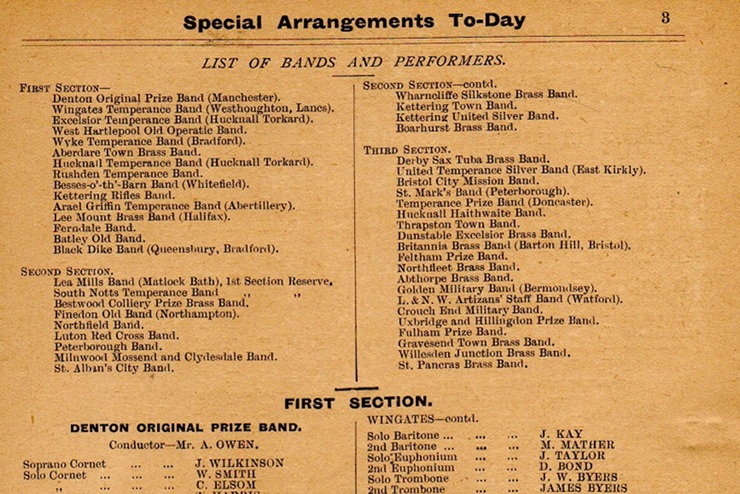
Bands came from far and wide to take part - but not qualify - for the National Finals
Personal dream
Soon the British Bandsman reported that changes were afoot and that a series of geographical ‘Area’ contests would take place which would lead to invitations to compete at the reinvigorated National Championships.
For Iles (below) it was the fulfilment of a personal dream, writing: “Thanks to the broad and practical vision of the Daily Herald management, I am very confident nothing but complete success can result.”
For Iles it was the fulfilment of a personal dream, writing: “Thanks to the broad and practical vision of the Daily Herald management, I am very confident nothing but complete success can result.”
Organising work
Vaughan Morris however had to undertake a prodigious amount of work in organising things. “Iles’ National Championships were really as a dead as a dodo in 1945,” he later wrote, “and we had to work out a completely new organisational attitude and approach.”
He added: “We had to make sure that the championships were properly organised regionally. The problem was that some regions resented this – they wanted to run their qualifying contests with their own test pieces, their own adjudicators etc. There was a battle royal over this, especially in the north west and Yorkshire.”
Rebellion
However, support came with a strongly worded editorial in the British Bandsman in May 1945: “If there is any attempt by any association to boycott any of its bands from taking part in any of these area contests, it will not only be entirely out of order but must lead to serious results.”
Yorkshire and Lancashire threatened a rebellion, yet in the end commonsense prevailed, even, if much like 80 years later, there was a somewhat resentful opinion that some Area contests offered an easier qualification route to the National Finals than others, with just 11 bands competing in the South West in the first year.
Yorkshire and Lancashire threatened a rebellion, yet in the end commonsense prevailed, even, if much like 80 years later, there was a somewhat resentful opinion that some Area contests offered an easier qualification route to the National Finals than others,
Sophisticated age
Soon though numbers climbed. By 1946 the eight regions were firmly established - London, Lancashire, Leicester, South West, Northern, Yorkshire, Scottish and Wales. In 1945, 214 bands entered, the following year it was 320 with the figure increasing to 399 in 1947 and 423 in 1948.
Vaughan Morris was vindicated and wrote in his autobiography: “The procedure of ‘Area’ contests had been instigated to act as a sieve to indicate the suitability, or otherwise, of the would-be participants in the National Finals... to meet the needs of the far more sophisticated age which was emerging.”
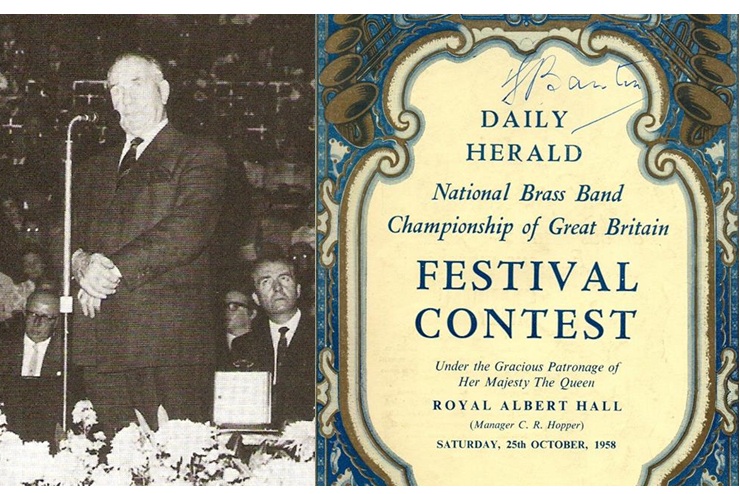
Vaughan Morris brought in many new changes
Registry
With the newspaper’s popularity and professional prestige in running the event, soon came the setting up of the National Registry, that despite objections after what Vaughan Morris called “a tremendous battle”, saw an essential element of control over player registration.
The euphemistic cash-induced ‘borrowing’ of players on a contest day ended (although this has now recently been changed). Thanks to the support of the Daily Herald newspaper and the indefatigable work of Vaughan Morris, a true National Brass Band Championships of Great Britain contest series (with a Gala Concert to round things off at the Royal Albert Hall) was now organised and administered on a professional basis.
Harry Mortimer later wrote that whilst he never quite saw eye to eye with Vaughan Morris he had in his view, “brought more prestige and dignity to the whole structure than even his worthy predecessors.”
Harry Mortimer later wrote that whilst he never quite saw eye to eye with Vaughan Morris he had in his view, “brought more prestige and dignity to the whole structure than even his worthy predecessors.”
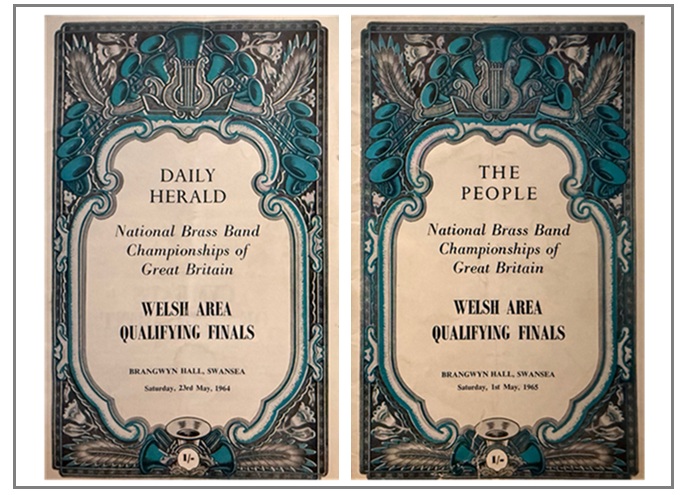
People thought that the Area changes would be small - but it wasn't to be
Shock announcement
Over the next 20 years everything seemed to go almost without a hitch. However, the shock announcement of the closure of the Daily Herald in 1964 started a chain of events that almost saw the end of it all.
The People, a Sunday paper owned by the same company, but with a very different outlook, took control.
The People, a Sunday paper owned by the same company, but with a very different outlook, took control.
It seemed to be ‘business as usual’, but with Vaughan Morris now reaching retirement age and with The People fighting a circulation drop and losing direct interest, the 1965 Area contests were a mess, with British Bandsman saying that they were, “being drained of support to the extent that it is no longer practical to continue their presentation.”
It was reported that one in five bands listed to be entered failed to notify their intention to be present on the day.
Not best pleased
The People newspaper was not best pleased either and called a special meeting of the National Contesting Council (NCC). Other contests were attracting bands, and other newspapers were selling more copies. The Nationals seemed to belong to a different age of older readership. The People wanted out.
The NCC report simply said the Area contests, “now had neither cohesiveness nor objective purpose.”
That was enough to trigger The People to announce that Area contests would not take place in 1966 and that the National Registry and the National Contesting Council “would cease to exist” from October 1965. The National Final would be an invitation contest.
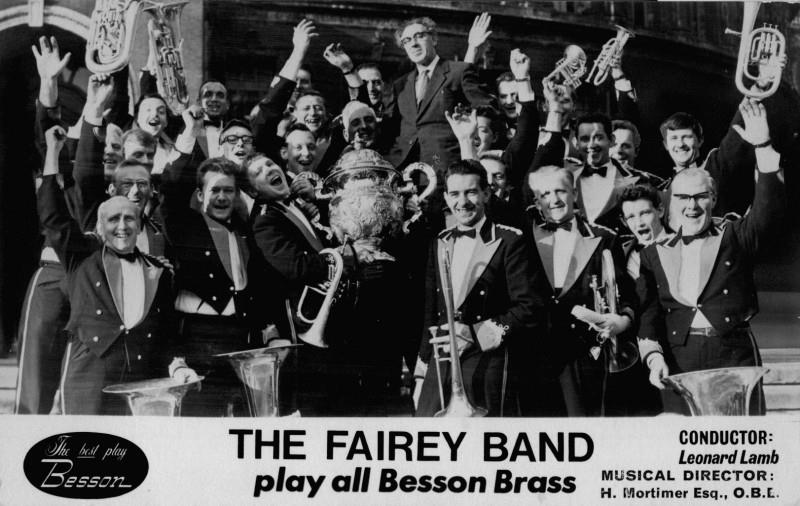
Fairey could well have been the last qualifying National Champion
Precipice
The whole construction of the National Championships were on a precipice. Eric Ball, the editor of British Bandsman wrote: “What The People has done has made a sad day for brass bands.”
Eric Ball, the editor of British Bandsman wrote: “What The People has done has made a sad day for brass bands.”
Appalled at what may occur, Vaughan Morris met various ‘Area’ committees in a bid to gain renewed support. The North East Area Committee took the lead, renaming itself the Yorkshire Brass Band Festival Committee and declared its intention to organise a Yorkshire Championships in 1966 with the expectation of the highest placed bands being invited to the Finals.
It was the initial victory Vaughan Morris sought – one that was quickly followed by the West of England. By the end October 1965 most Area committees had agreed to do the same.
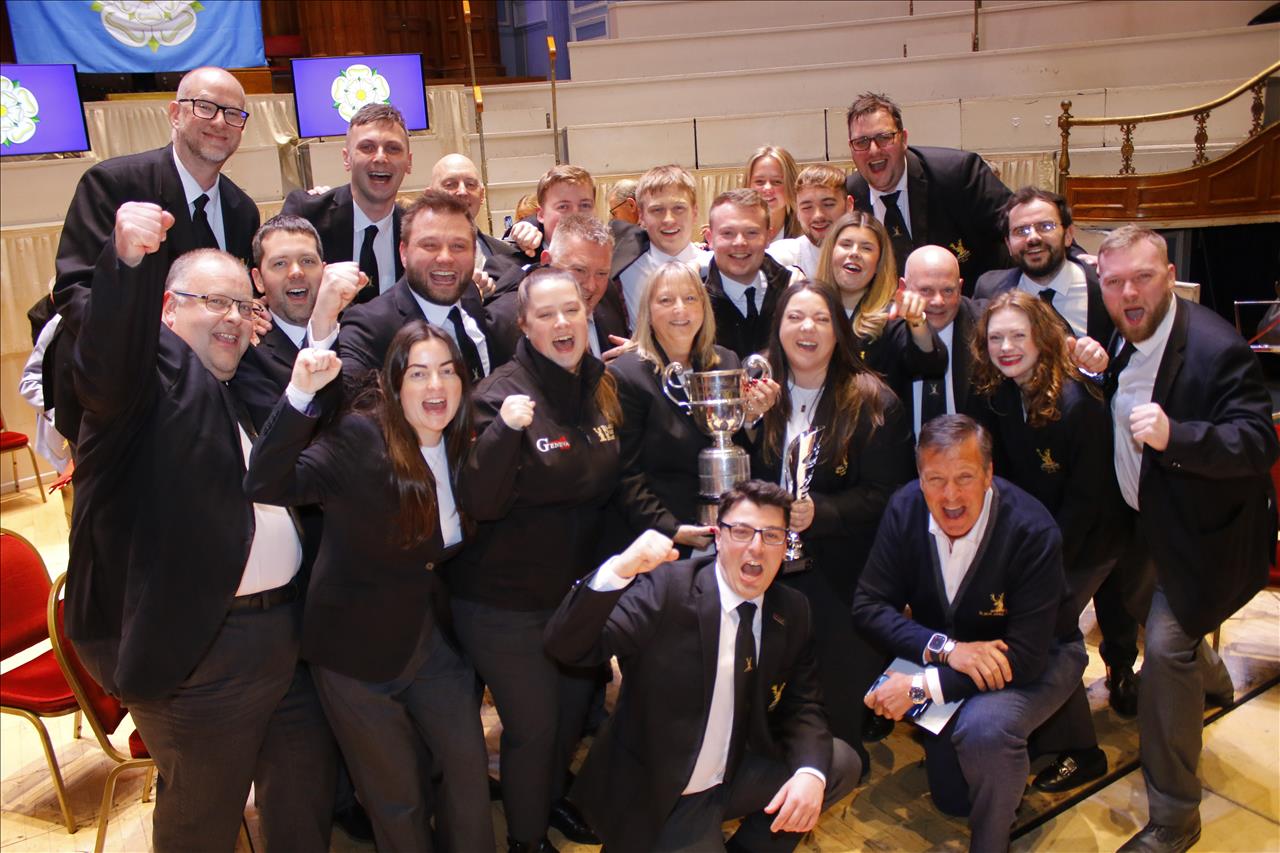
Area success still means a great deal for bands at all levels...
Close call
The significance of Vaughan Morris’ diplomatic efforts saw Area Committees take autonomy for the running of the events (although the trophies all came courtesy of The People). A new sense of renewal had taken hold, and whilst there were still grumbles and challenges, the immediate possibility of collapse had been overcome – although it had been a very close call.
It may be well worth considering, amid the usual annual grumbles about just how much we really value the regional championships when the first of nearly 500 bands take to the stage this year.
Vaughan Morris remained the driving force. By 1966 he had agreed to organise seven accredited regional finals. The People, perhaps thankful that it had averted bad publicity as well as being able to rid itself of a financial burden announced in December 1966 that it had handed over its entire responsibility for the National to Vaughan Morris who became the owner of the titles.
Since that time further changes in ownership and structure have been made, but none, despite what many people may think, were as fundamental as that of 1966.
It may be well worth considering, amid the usual annual grumbles about just how much we really value the regional championships when the first of nearly 500 bands take to the stage this year.
Tim Mutum