

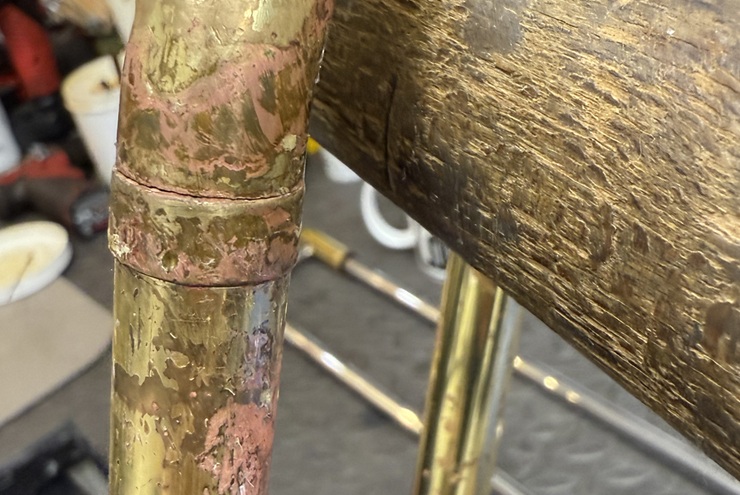
Hoof prints in valve blocks, crumpled bells, run-over instruments – we’ve seen it all in the Rosehill workshop. Sometimes, damage is just bad luck. But what about the more common problems, like poor valve action or tarnishing?
Every time you play, acidic oil transfers from your skin to the finish, while dirt and limescale build up on the inside. If left to sit, the water and dirt cause red rot, which will slowly destroy your instrument.
That’s why it’s so important to know how to clean your instrument – so here’s our technician-approved regime to keep your instrument in working order.
You will need
- Microfibre cloth, silver/lacquer cloth, and cotton rag
- Valve rod
- Flexible bore brush, flexible brush for internal cleaning (the size will depend on your instrument), and mouthpiece brush
- Valve oil (for piston instruments)
- Rotor, linkage and bearing oil (for rotary instruments)
- Hand slide lubricant (for trombones)
- Tuning slide grease and tuning slide oil
Every time you play
- Wipe off fingerprints with a microfibre cloth.
Fingerprints will tarnish silver plate, and they’ve been known to strip off lacquer within months if not cleaned! Wipe any areas that you’ve touched as soon as you’re done playing to avoid permanent damage.
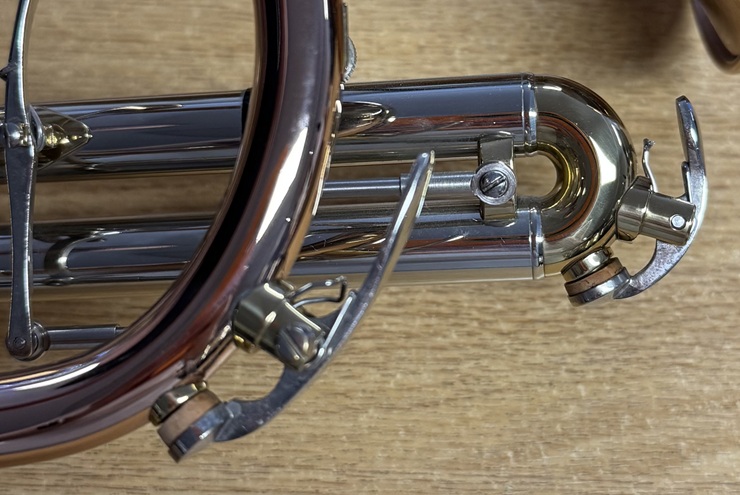
- Drain all water from the instrument.
Water attracts dirt, which will cake on if left to dry in your instrument. Blow water out the water keys and drain the slides. Tubas, euphoniums, tenor horns and baritone horns will suffer the most if you skip the last part.
Because they’re stored on their bell, the water runs straight out of the tuning slides and right into the valve casings.
3. Dry around the water keys with a cotton rag.
The water around the water keys will discolour and roughen the finish if it dries on.
On silver plate, water marks can require a full manual polish to remove, which is expensive – and potentially damaging, since the marks also make the finish less durable.
Dab the water away with a cotton cloth (not microfibre – it’s not absorbent and will just spread the water around). If you spot any marks already starting to form, rub them off with a damp cloth.
Every week
- Clean or lubricate the valves.
Clogged-up valves do not play well! How you maintain them will depend on whether you have a piston or rotary instrument, but it’s just as important either way.
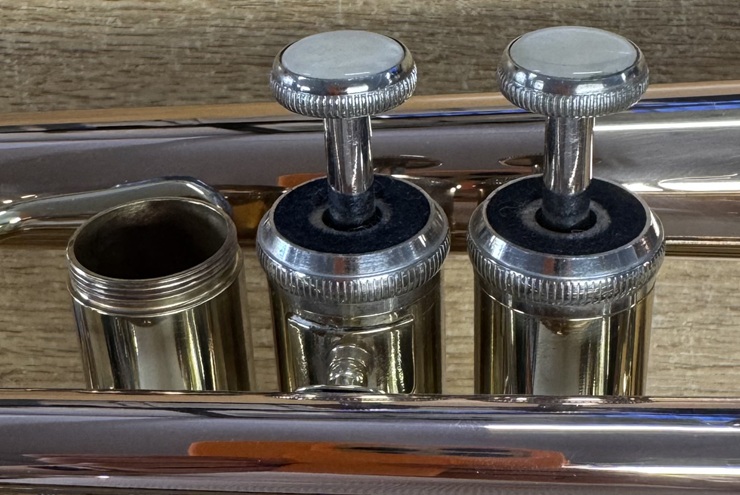
On piston instruments:
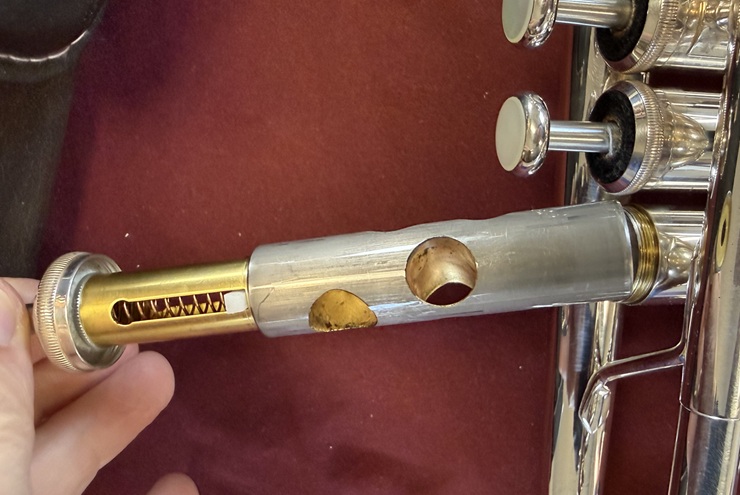
Unscrew the top and bottom caps.
Remove the pistons and lay them on a cloth. (If they’re too stiff to remove, it’s definitely time for a service!)
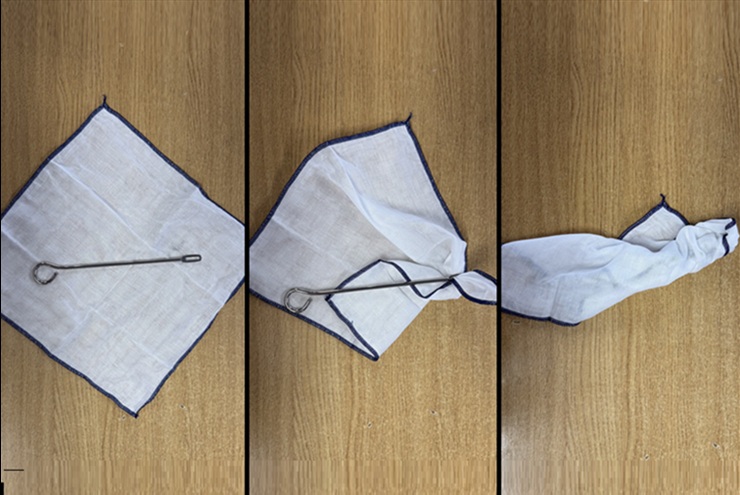
Use a valve rod and cotton cloth to clean through the inside of the valve casings. (Feed the cloth through the eye of the valve rod and wrap the cloth around the rod.)
Wipe the outside of the pistons and clean through the ports with a cotton cloth wrapped around your finger. (Do NOT use a valve rod this time – the ports are very delicate!)
Apply valve oil to the surface of the pistons before reassembling.
On rotary instruments:
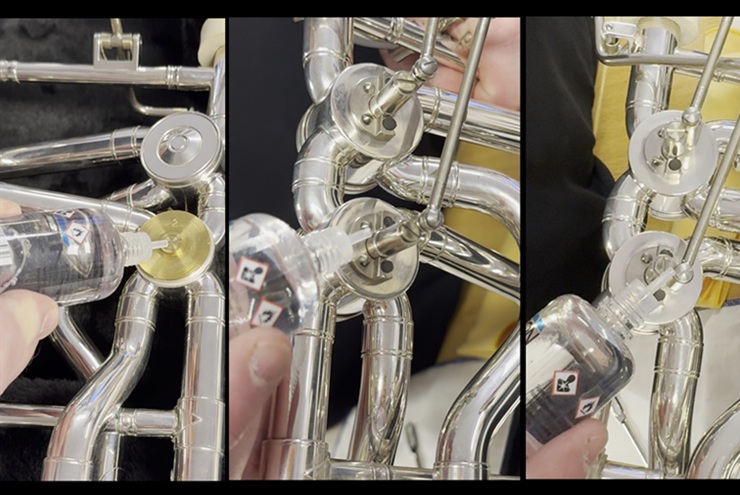
Rotary valves can only be properly cleaned by a technician, who can remove them safely, so you’re going to lubricate them instead.
Remove the tuning slides and drop some rotor oil into the valves. Unscrew the cap on the rotor and apply a drop of bearing oil to the bearing. Also apply bearing oil between the stop-arm and the bearing. Apply linkage oil to levers with miniballs.
Every month
- Clean the leadpipe (and the connected tuning slide, if there is one).
- Remove the valve caps first so that you’re not just pushing gunk into the valves.
Run the leadpipe under a tap or pour or spray some water through – whatever you can manage – and run a long flexible brush through. - Take a flexible brush to the slides that get the most water, such as the main tuning slide on a trumpet or cornet.
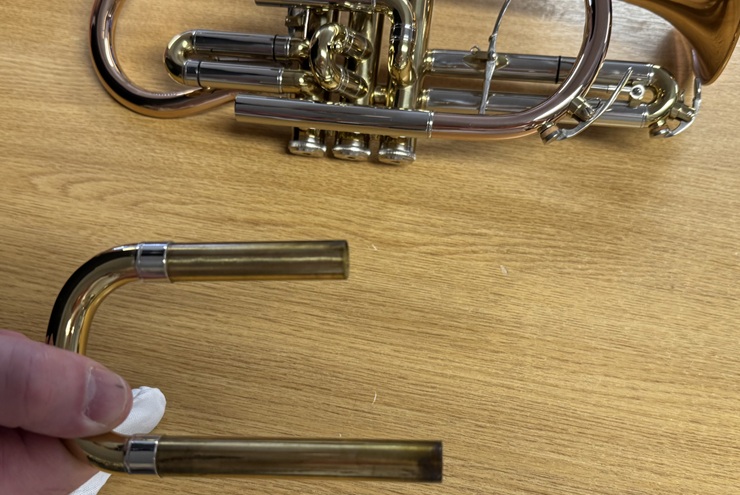
For trombones, use a slide cleaning rod and a cloth to clean old lubricant and water off the inside of the outer hand slide. Wipe the outside of the inner hand slide with a rag. Wash through the slide with running water and a flexible brush to clean the bottom bow.
Warning: NEVER force a cleaning brush round a tight tuning slide bend! You might damage the bow.
- Wipe down and regrease all slides.
- Wipe off any old grease or oil with a cotton cloth and re-apply.
- Clean the mouthpiece.
- Run a brush through the inside and wipe the outside with a damp cotton cloth.
Every 6 months
- Strip the instrument down and give it a COLD bath.
We admit this one could be challenging for some instruments. Tuba players might start wishing they’d taken up the cornet!
Remove all slides, pistons and bottom caps and submerge the instrument. Heat can cause lacquer finish to deteriorate overnight, so the water needs to be cold. Even slightly warm water can be damaging. If it feels warm to you, it’s too warm for your instrument. (Warm water on silver plate isn’t a great concern, but cold is always safe.)
Use a household detergent like washing up liquid to help remove grease and dirt.
- Use a flexible brush or cotton cloth to clean all the openings.
Leave to dry completely before putting it back together.
- Clean all slides.
Run a flexible brush through all the slides this time, not just the wettest ones.
Overall:
There you have it – a 10-step plan for a healthy instrument.
Follow the schedule to keep your instrument shining, your slides sliding, and your valves moving. And when you do come to us for a service, we promise to be very impressed!
You can find brass cleaning and maintenance supplies on our website. If your instrument needs repairing or servicing, drop us a line at info@rosehillinstruments.co.uk or call us on 01494 671717.
Rosehill Instruments