

The revolutionary outlook: Philip Sparke - the composer who changed contest thinking
Philip Sparke is the most unlikely revolutionary figure you are ever likely to meet. Yet in 2004 he changed the contesting world – the results of which are still being felt today.
As with the most successful revolutions, nobody saw it coming, although in retrospect things were ripe for change. However, what set this particular one apart was that it was not driven by an ideological desire. Instead, it was an immensely clever re-evaluation of musical thinking.
Inspired King
His peaceful coup d’état was delivered by an inspired David King and the swaggeringly brilliant Yorkshire Building Society Band. In the space of 18 and half minutes at the European Championships at Glasgow’s Royal Concert Hall (below), ‘Music of the Spheres’ completely changed the mind set of elite level contest winning aspirations.
In the space of 18 and half minutes at the European Championships at Glasgow’s Royal Concert Hall (below), ‘Music of the Spheres’ completely changed the mind set of elite level contest winning aspirations.
The new age of the bespoke own-choice test-piece had arrived. Yet that was only half the story.
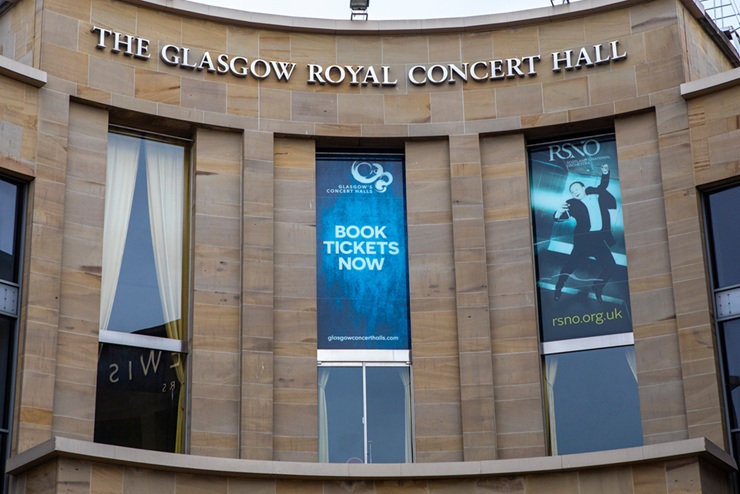
Time and place: Glasgow Concert Hall - 1st May 2004
Dichotomic thinking
It came at a time when the musical outlook of the European Championships was one of flux and dichotomic thinking.
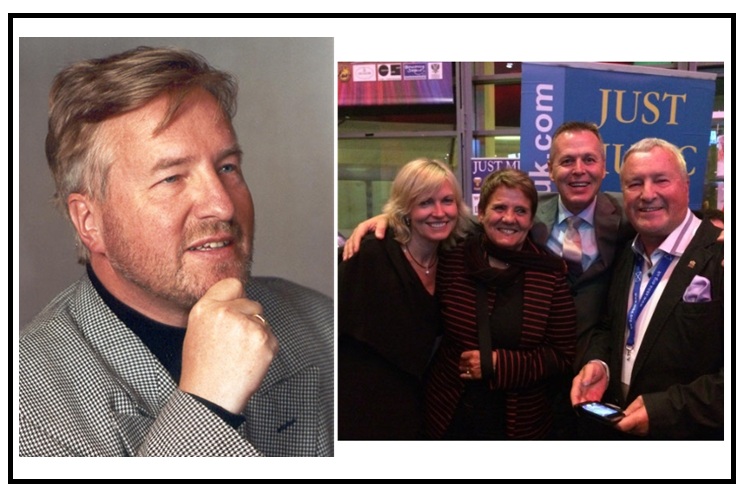
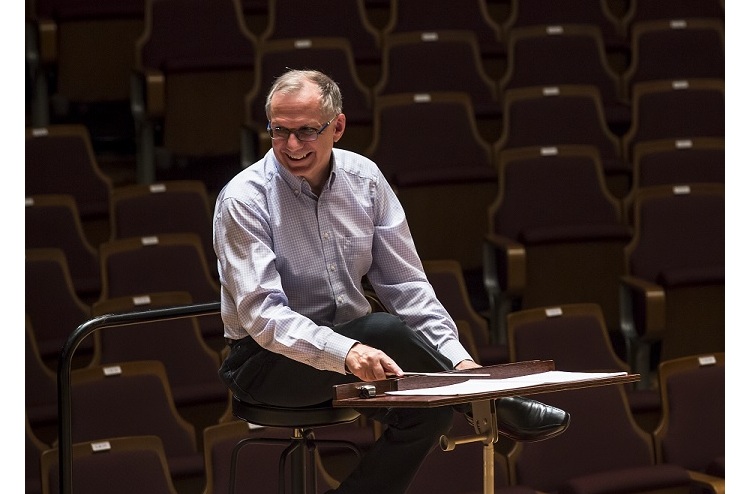
In 1996 EBBA President Markus S Bach (below) spoke of having, “to learn from other successful European events”. Not only did he propose that EBBA, “consider ways of acquiring and distributing funds” to various national contests through a European Brass Band Fund, but he also acknowledged the problems that many competitors had in financing successful European performances.
“we must also look forward and actively stimulate diversification and new opportunities”.
“Very few,” he said, “are in a position to bear the cost of participating in the Championships”, concluding that, “we must also look forward and actively stimulate diversification and new opportunities”.
Deaf ears
However, as much as Markus Bach tried (and he did propose a number of initiatives to modernise the European event during his tenure), his lavender strength revolutionary ideas fell on deaf ears.
There was to be no dispersion of funds. EBBA was no Trotskyist group hell bent on financing international change.
Forget ‘perestroika’. Money was kept in its coffers and by the next European contest in London in 1997, its Music Commission had implemented a new 3 year policy plan that looked back almost to the 19th century rather than forward to the 21st.
Forget perestroika. Money was kept in its coffers and by the next European contest in London in 1997, its Music Commission had implemented a new 3 year policy plan that looked back almost to the 19th century rather than forward to the 21st.
In 1997 bands were restricted in their own-choice selections of works written between 1920 and 1940, the following year, they came from the period 1960-1980, and in 1999, from 1981 to 1999.
Repurposed test-pieces
With no financial EBBA support through qualifying events, from the year 2000 competing bands returned to repurposing test-pieces from the major championships, or older works with track records of success from composers such as Wilby, Gregson, Graham, Bourgeois and Sparke himself.
In 2000 it saw ‘…Dove Descending’ (1999 Open test piece) played by two of the podium finishers alongside ‘Concerto Grosso’. Two more played ‘Montage’ (1994 Masters) and another two ‘Paganini Variations’ (1991 Open).
The blueprint for success seemed set in recycled stone.
A year later the top three played ‘Montage’ (1994 Masters), ‘Harrison’s Dream’ (2000 National) and ‘Cambridge Variations’ (1992 Masters) - whilst in 2002 it was ‘Concerto Grosso’, ‘…Dove Descending’ (played twice) and ‘Revelation’ (1995 British Open – played twice).
In 2003 Yorkshire Building Society retained its European title thanks to a reprise of ‘Concerto Grosso’, with the podium finishers yet again trusting in the prize-winning credentials of ‘Revelation’ (played three times in total) and ‘…Dove Descending’.
The blueprint for success seemed set in recycled stone.
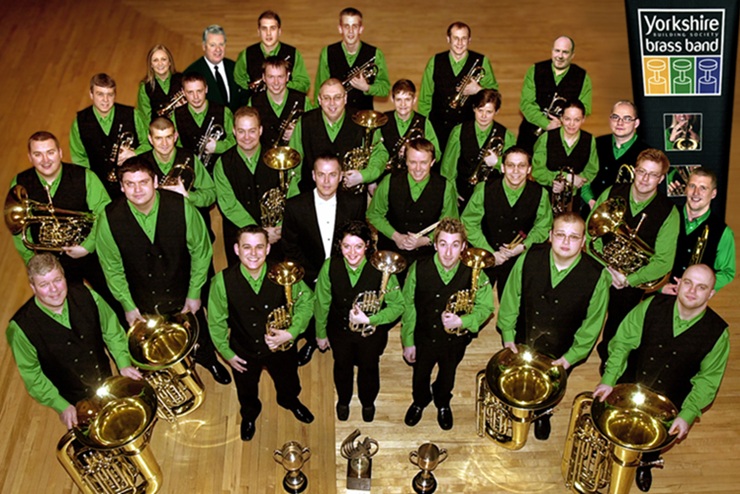
The revolutionary guard... David King and his 2004 band
Different thinker
Someone though was thinking differently - and that someone was David King.
He was now looking for a sixth consecutive European victory to cap what was a revolution of his own since turning the old Hammonds Sauce Works Band into the pre-eminent contesting outfit of the era under their sponsors identity as Yorkshire Building Society.
Finest iteration
By 2004, they were in their last and finest iteration, with principal players such as Peter Roberts, Stuart Lingard, Sheona White, Iwan Williams, Chris Jeans, Michael Howley, Bob Blackburn, Gavin Saynor and Gavin Pritchard backed by a formidable ensemble.
They had won the 2003 British Open and just weeks before their trip to Scotland were victorious at the Yorkshire Area. Soon after their Euro success they were to claim the Masters crown – their last major title together.
By 2004, they were in their last and finest iteration, with principal players such as Peter Roberts, Stuart Lingard, Sheona White, Iwan Williams, Chris Jeans, Michael Howley, Bob Blackburn and Gavin Pritchard backed by a formidable ensemble.
Backed and right
Having already used ‘Revelation’, ‘Pageantry’, ‘Blitz’, ‘Harmony Music’, ‘…Dove Descending’, ‘Montage’ and ‘Concerto Grosso’ (twice), his heavyweight musical options to claim a sixth title in a row were thinning out.
He was right. Something very different was required. And David King knew just what.
Not for the first time he backed himself, asked for the money from his sponsors (who came to the contest to witness what their money had been spent on) and was proven right.
Not for the first time he backed himself, asked for the money from his sponsors and was proven right.
Even in the early years of the internet it remained a closely guarded secret - no-one saw what was coming.
Elsewhere at the 2004 Glasgow European, Philip Wilby’s ‘…Dove Descending’ and ‘Revelation’ was chosen by three bands each and ‘Montage’ by another two. ‘Harrison’s Dream’ (played three times in the past three years), and ‘Diversions on a Bass Theme’ (1998 British Open test piece) made up the own-choice selections.
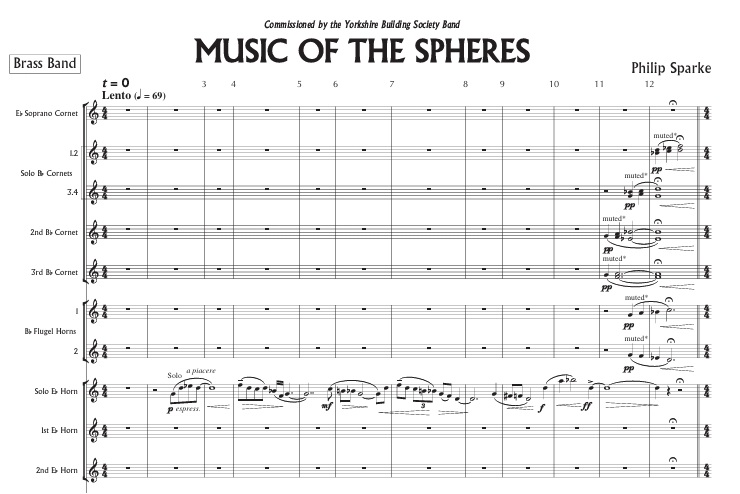
t = 0
The only hint on the day of anything new (apart from the name of piece and its composer in the programme) came from Frank Renton’s concise introduction to the audience as the band walked on stage.
After that it was left to David King to start a revolution - the haunting ‘t = 0’ opening the clarion call given by Sheona White and taken up by her virtuoso colleagues.
For Philip Sparke it was to prove to be the perfect affirmation of his compositional craftsmanship – the self-confessed ‘musical tailor’, who created bespoke works for the customer paying for his services. This one though was to become priceless.
Satisfying
In a later interview, he simply said that he hoped his works were, “enjoyable and satisfying to play while allowing bands to demonstrate their skill set at all contesting levels”.
He has also admitted that he believed ‘Music of the Spheres’ to be the one that had “the most emotional heft”.
He has also admitted that he believed ‘Music of the Spheres’ to be the one that had “the most emotional heft”.
It was, he said, “a piece I wrote without too much ‘thinking’ (i.e. relying purely on musical instinct rather than intellectual plotting) and I think this gives it a visceral intensity.”
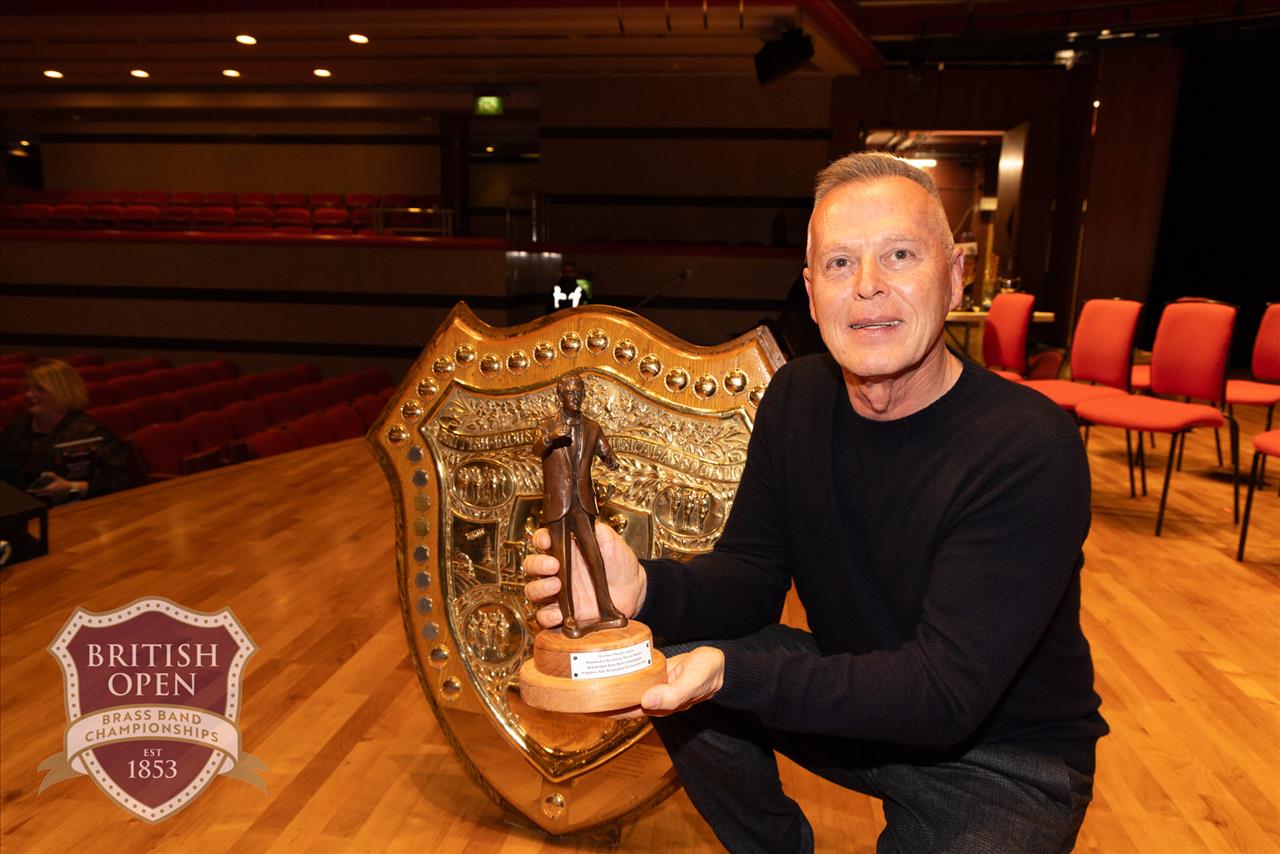
Prof King is hoping to add another British Open title to his 'Music of the Spheres' successes
Gut instinct
David King had certainly gone with his gut instincts as he later revealed.
“When you leave the task of composing such a piece in the capable hands of Philip Sparke you can be assured that the music will more than match the requirement.
‘Music of the Spheres' is a daunting test and a virtuosic musical statement with emotional content to match. It’s an ideal vehicle as a contest piece and also, I believe, another valued addition to concert repertoire provided by the band’s sponsor The Yorkshire Building Society.”
Repeated immediately
In his post-report for Brass Band World magazine, Alan Jenkins, the most respected of brass band journalists said that his first impressions of the piece, “were altogether good. Very good, in fact. Even better than that.” He added: “Without question, this was a special musical experience that this writer would have enjoyed being repeated immediately.”
He added: “Without question, this was a special musical experience that this writer would have enjoyed being repeated immediately.”
He was to be proved right – the following year (with YBS not there) three other bands played it – with another 148 own-choice performances at different events around the word since.
Almost a quarter of a century on from the first performance, ‘Music of the Spheres’ retains a remarkable sense of focussed purpose; a combination of lithe, muscular musicality, balletic agility and dramatic impulse.
Che Guevara
What followed in the years following at the European event though tells us a great deal too. Like the vast majority of revolutions, the first is invariably the most successful - the rest ride the wave, others are doomed. Just ask Che Guevara.
Since 2005, the title has been won by a band playing their own specially written own-choice work on 13 occasions in 20 contests. On two other occasions bands have topped the own-choice category with bespoke pieces but have not won.
Now, just about every band with realistic ambitions to win the European come armed with bespoke works - even if they don't readily admit it. There have been some succesful ones (including a couple from Sparke himself), even some great ones that didn't win and some distinctly odd, but innovative ones.
There is also a Room 101 full of discarded overweight, overwritten works that promised glory only to die on the blunt sword of pastiche, purposelessness and percussion overload.
Room 101
There is also a Room 101 full of discarded overweight, overwritten works that promised glory only to die on the blunt sword of pastiche, purposelessness and percussion overload.
That said, what was once a new blueprint for success has now become the established template in itself.
As Markus Bach alluded to 30 years ago, the invitation to represent your nation at the European Championships now comes not just with the expense of transport and hotels, rehearsals rooms and equipment, but also the cost of a new own-choice work to premiere if you really think you are going to be in with a chance of claiming the title.
That £6,000 first prize at the British Open may well come in handy for someone then.
Iwan Fox