
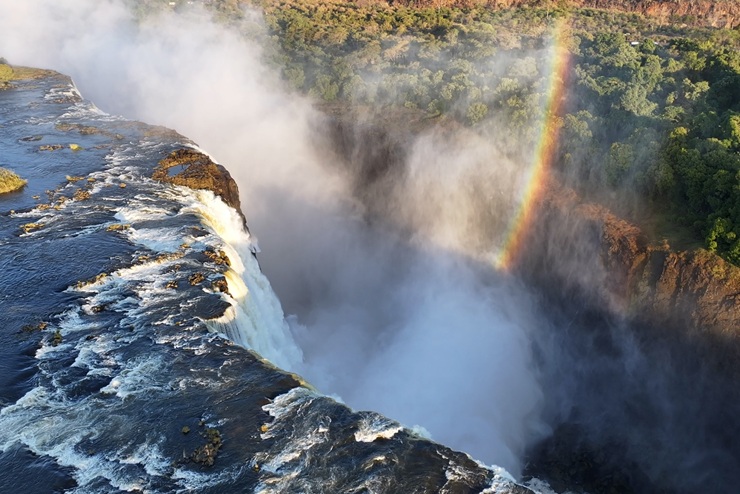
By the time Dr David Livingstone first set British eyes on ‘Mosi-oa-Tunya’ waterfall in November 1855, the African continent was already in the process of being rapidly ‘discovered’ in a European race to impose ‘Christianity, Commerce and Civilisation’ upon its people.
Livingstone implicitly believed in the ethos, but was substantially more enlightened than many (King Leopold II of Belgium for instance) in his advocacy of the establishment of trade and religious missions as well as the abolition of the slave trade.
His reputation was further enhanced on his return home as a public speaker in 1856, and in no small part in ensuring that ‘Mosi-oa-Tunya’ was renamed ‘Victoria Falls’.
Heroic legend
His heroic legend was sealed on his return to Africa, when he himself was ‘discovered’ in 1871 after losing contact with the outside world for over six years by Henry Morton Stanley (a Welshman of somewhat dubious morality).
His heroic legend was sealed on his return to Africa, when he himself was ‘discovered’ in 1871 after losing contact with the outside world for over six years by Henry Morton Stanley (a Welshman of somewhat dubious morality).
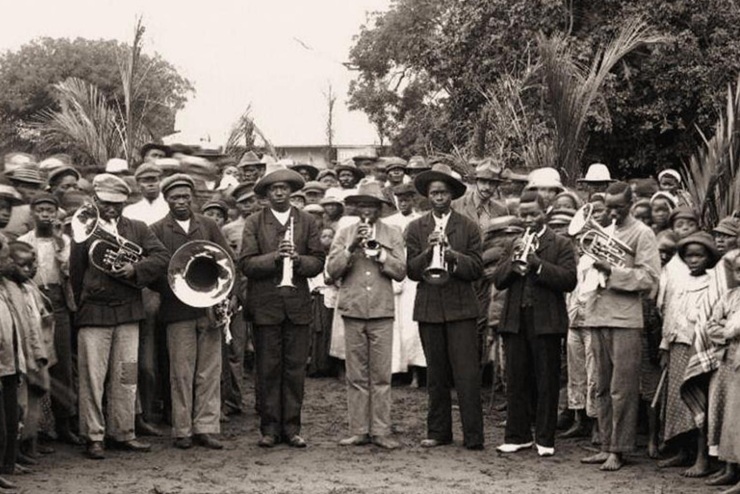
After his death ‘The Scramble for Africa’ up to 1914 led to the rapid imperial colonisation by European nations, although arguably one of the less insidious by-products of which included in some regions the emergence of brass bands (as above in Mozambique in 1907), many linked to Christian missions.
The legacy of this is explored in a fascinating book entitled, ‘Brass Bands of the World: Militarism, Colonial Legacies and Local Music Making’ - with variants remaining today from school bands in Uganda to Christmas Bands in South Africa.
Spirit of discovery
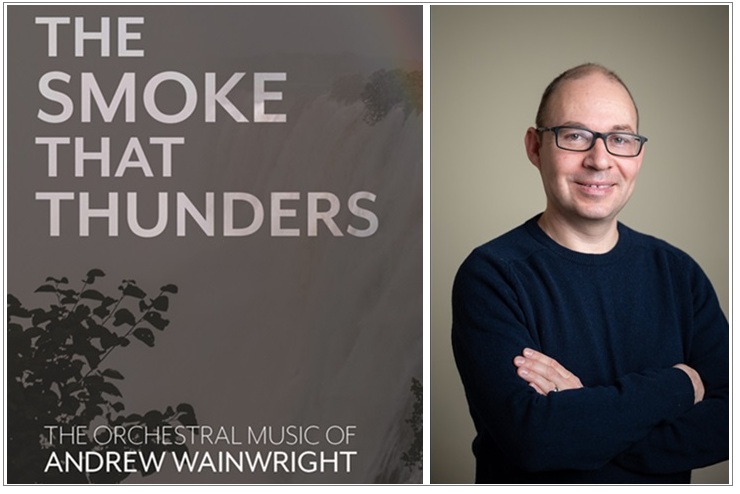
Andrew Wainwright’s filmatic First Section test-piece ‘Beyond the Falls – The Smoke that Thunders’ is inspired not by the outcome of explorations that followed in Dr Livingstone’s wake, but of the Scotsman’s own personal journey defined by what he calls his, “relentless spirit of discovery”.
Its climax is captured in the elation felt on seeing ‘Mosi-oa-Tunya’ (which translates to ‘The Smoke that Thunders’) for the first time on his trip into the unknown.
he packs a great deal of colourful purpose into just over 13 and half minutes of testing writing for bands with ambitions themselves to explore the new lands of the Championship Section in the years to come.
The composer grew up in the region, inspiring his own appreciation of its majestic beauty and mystery. As a result, he packs a great deal of colourful purpose into just over 13 and half minutes of testing writing for bands with ambitions themselves to explore the new lands of the Championship Section in the years to come.
Tough journey
This is as tough a journey to success though as Livingstone’s own.
It opens with a sense of mysterious trepidation – ‘A Mission Call’ to a land with a potential ‘Heart of Darkness’ as author Joseph Conrad memorably called it.
Like that revealing novella, what follows is a series of pictorial chapters, starting with ‘A Path into the Interior’ - bold, bravura and pioneering in its forward momentum as it cuts a swath with a distinct Scottish underpinning to its initial optimism.
Battles and prayer
Livingstone’s famous battles with a marauding lion, warring tribes and bouts of fever draw the music to a section of ‘Prayer’ reflection. This is led by a plaintive flugel, soprano and horn with a flowing hymnal attachment to ‘Lord, Send Me Anywhere’, composed by the missionary explorer himself.
Any lingering self-doubt is washed away in a majestic climax and a renewal of purpose
Any lingering self-doubt is washed away in a majestic climax and a renewal of purpose as another atmospheric percussion connection (ad-lib cymbals, claves and rainstick) once again draws the music forward, although on this occasion heading up the Zambezi River with a subtle reduction in pace from the opening fast section – 136 rather than 144.
Discovery
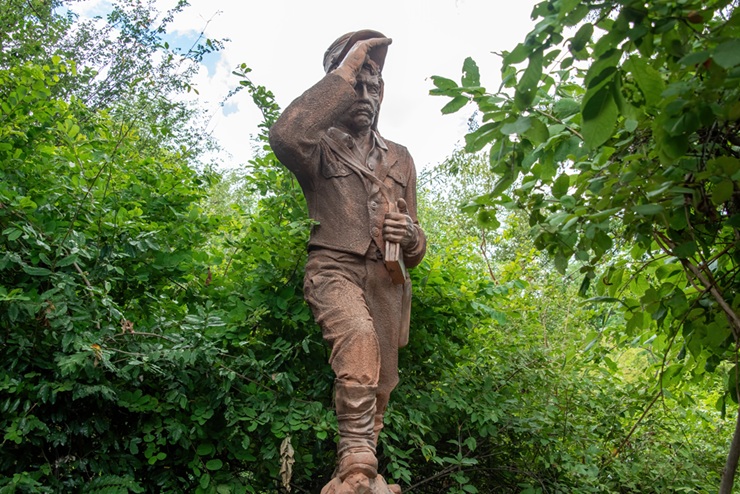
The finale is the ‘discovery’ itself – the initial wonder building with intensity as the full grandeur of what is before Livingstone (above) is revealed – light sparkling in rainbow intensity and pace through the ‘smoke’ in thunderous glory.
Conductors thinking ratcheting up the excitement levels even more though should perhaps take note of last weekend’s result at the British Open.
Conductors thinking ratcheting up the excitement levels even more though should perhaps take note of last weekend’s result at the British Open.
There David Hirst was part of an adjudication team that clearly advocated keeping close scrutiny on balances in dynamics and accuracy and stability in pacing.
He is joined by David Thornton (who helped in the preparation of third placed Brighouse & Rastrick) and Mark Wilkinson (who was principal cornet with winner Foden’s).
Survival guarantee
The last decade or so has seen a number of ambitious bands claim National title success, although looking back to 1992, victory hasn’t been a guarantee of long-term survival. Six former winners are now no longer with us.
Others have prospered though, so hopefully whoever is successful on the weekend can look forward to building further on their achievement.
looking back to 1992, victory hasn’t been a guarantee of long-term survival. Six former winners are now no longer with us.
Contenders
Last year’s winner was Unite the Union, with hopes of a third success for Yorkshire in five years (Stannington also won in 2022) falling to the strong looking pairing of champion South Yorkshire Police and Marsden Silver.
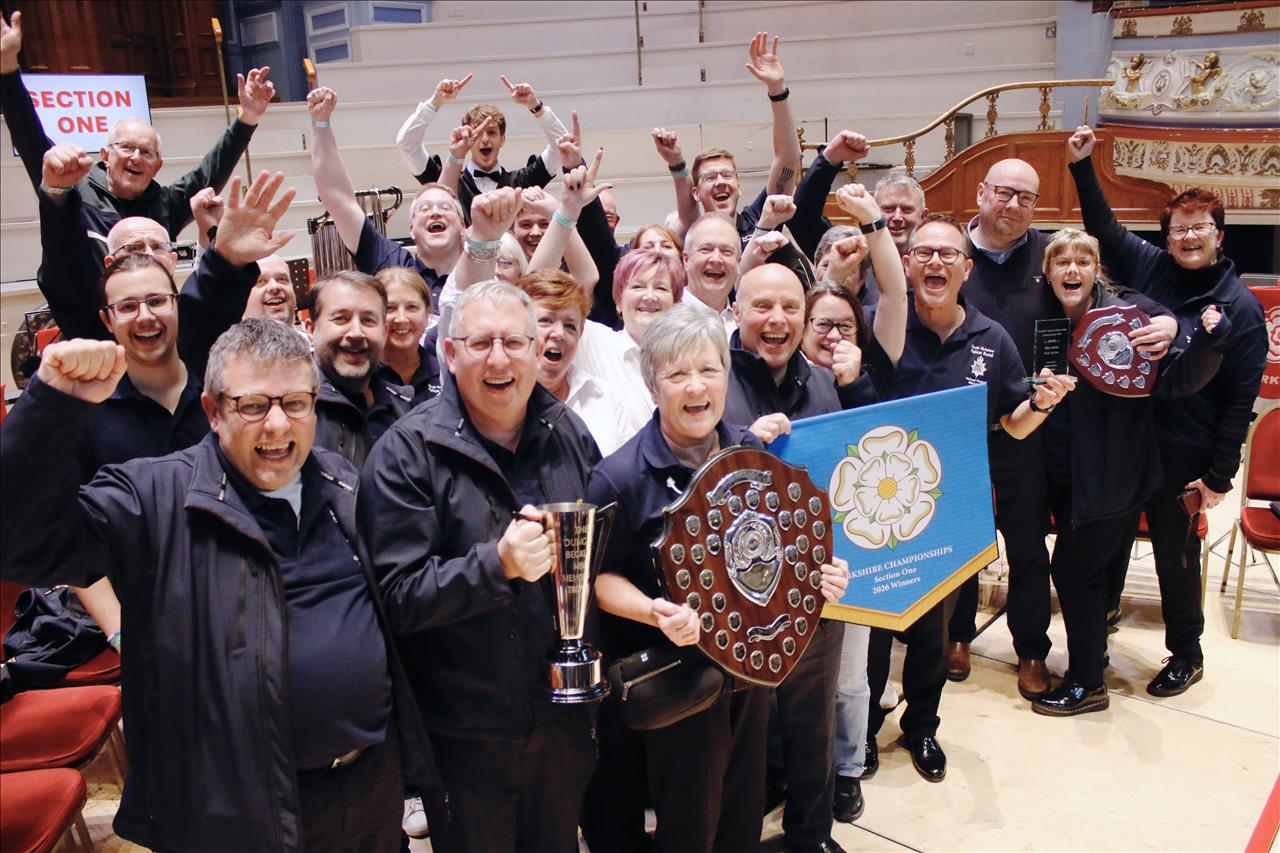
South Yorkshire Police (above) are on quite a run of form since they won the Second Section National title last year, whilst Marsden (who have also been conducted by Leigh Baker, but will be directed by Ben Dixon in York) not far behind.
Midlands hopes of a first win since 2006 rest with the trio of Area champion Rushden Town (making a first appearance since 2017), returnees Raunds Temperance (14th last year) and Hucknell & Linby, who take to the stage for the first time since 2019.
Wales and Scotland
Both Wales and Scotland have enjoyed success in recent times (Wales winning in 2015, 2023 and 2024, and the Scots in 2019 and 2021), although Parc & Dare will be the sole Welsh representative as only six bands made it to the Area starting tape. They have though continued to impress on their contest outings since coming fourth here last year.
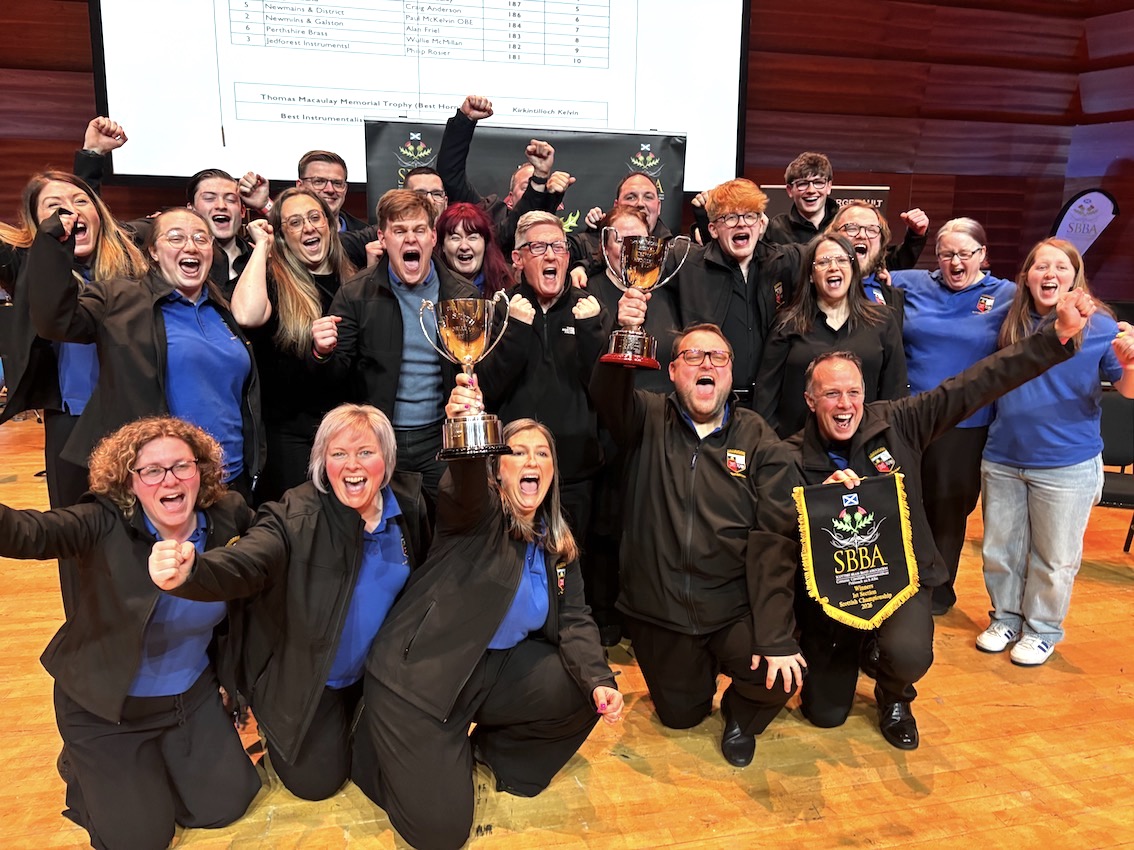
So too Kirkintilloch Kelvin (above), who took the Scottish title in fine style in March. Victory under their MD would give the Gray household a unique piece of banding history to celebrate.
So too Kirkintilloch Kelvin, who took the Scottish title in fine style in March. Victory under their MD would give the Gray household a unique piece of banding history to celebrate.
Joining them is Lochgelly, whose conductor Chris Shanks will be looking to enjoy success both here and at the Royal Albert Hall in a couple of weeks’ time in leading Whitburn.
London and the North
You have to go back a while for the last time bands from London & Southern Counties or the North of England enjoyed success (2010 and 2003 respectively), but their representatives should be confident of doing well.
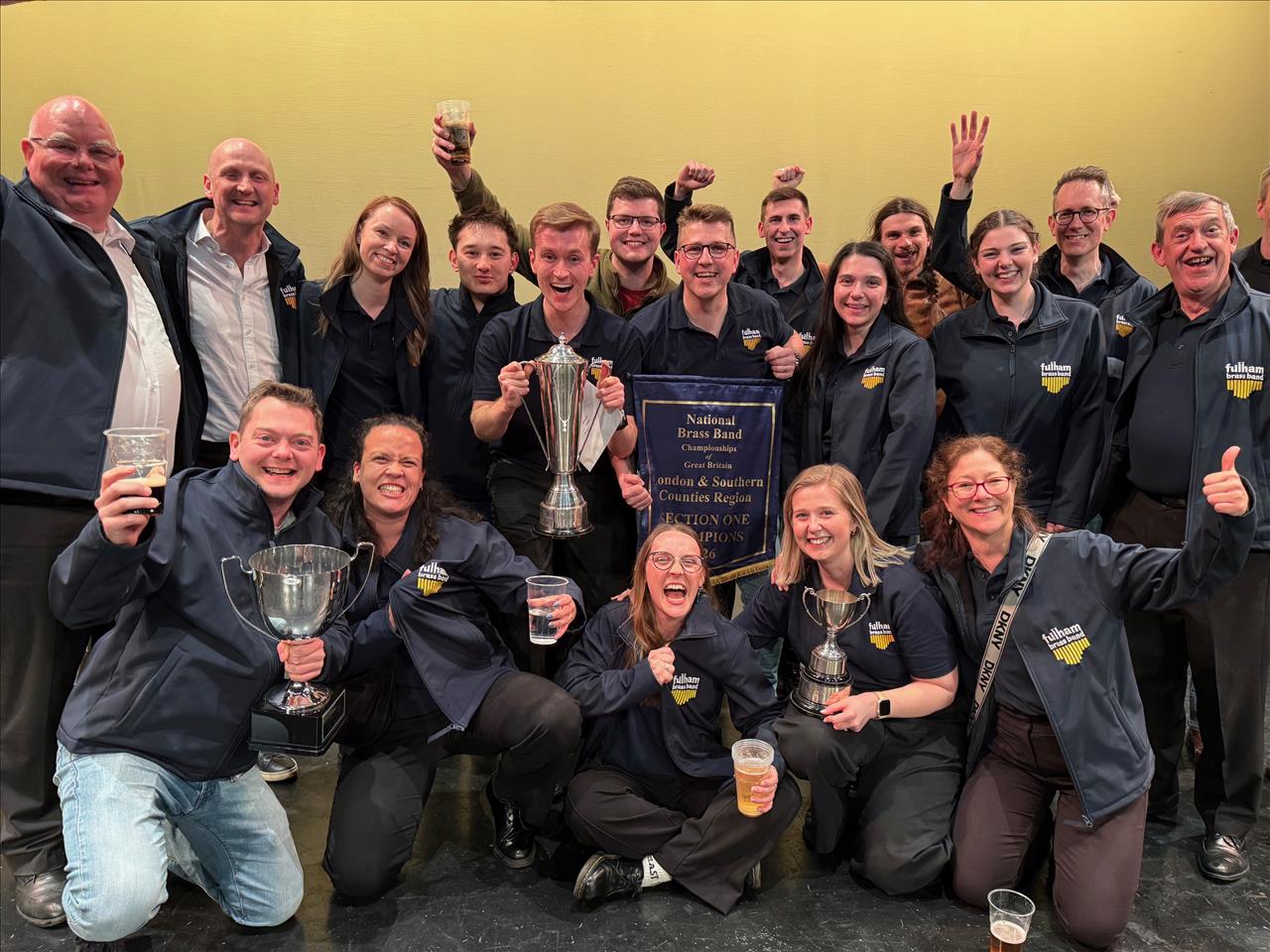
Fulham (below) was a classy winner in Stevenage, whilst the consistent East of England were right on their coattails Meanwhile, North of England Area champion Durham Miners Association has been solidly going about its contesting over the last few years – making their fourth finals appearance since 2021.
West and North West
A trio of determined West of England contenders make the long-haul trip north as they look to secure a first National title since 2016.
They are led by Area champion Lympstone making a first finals appearance since 2017, alongside returnees Roche Brass (who came sixth last year) and Bournemouth Concert Brass, back for their first attempt at winning the title since 2018.
4BR will be in York for the weekend to cover the event but on this occasion is unable to provide live band by band coverage due to family commitments. The draw and results will be posted on the site as soon as possible with full news reports.
The last North West victory came in 2018, with hopes that will change this weekend coming in the form of Area champion Haydock, returning for the first time since 2016, and Tyldesley (for the third time in five years).
Both bands recently tested the British Open Senior Trophy waters in Birmingham. They are joined by recent Fleetwood contest winner Blackburn & Darwen (which sends them back to the Senior Trophy in 2027).
Coverage
4BR will be in York for the weekend to cover the event but on this occasion is unable to provide live band by band coverage due to family commitments. The draw and results will be posted on the site as soon as possible with full news reports.
Iwan Fox
First Section:
Test piece: Beyond the Falls – The Smoke that Thunders (Andrew Wainwright)
Adjudicators: David Hirst, Dr David Thornton, Mark Wilkinson
Saturday 19th September
Draw: 12.45am
Start: 3.15pm
Blackburn & Darwen (Daniel Thomas)
Bournemouth Concert Brass (Lloyd Bartlett)
Durham Miners Association (Stuart Gray)
East of England Co-op (Mark Ager)
Fulham (Alan Thomas)
Haydock (Mark Quinn)
Hucknall & Linby MC (Chris Ledger-Knapp)
Kirkintilloch Kelvin Brass (Mareika Gray)
Lochgelly (Chris Shanks)
Lympstone (Chris Spreadbury)
Marsden Silver Prize (Ben Dixon)
Parc & Dare (Dewi Griffiths)
Raunds Temperance (Jonathan Pippen)
Roche Brass (Matt Green)
Rushden Town (Adele Hudson)
South Yorkshire Police (Leigh Baker)
Tyldesley (Neil Samuel)
York Railway Institute (Dr David Lancaster)