
The success of moving the Section 1-4 National Finals from Cheltenham to York has once again brought into focus the challenges faced by Kapitol Promotions over the future of the Championship Section event at the Royal Albert Hall in London.
A distinct sense of revived enjoyment accompanied the well-chosen music heard as the 1500 seat Barbican venue became a vibrant hub of contest activity.
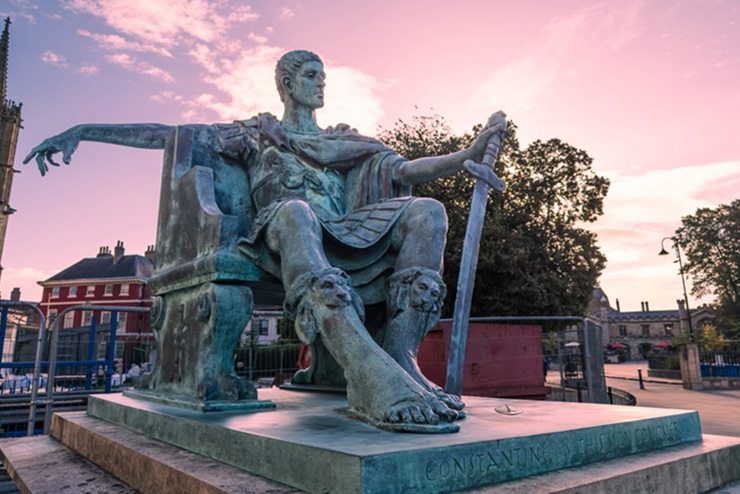
The plaudits for a decision that struck a positive balance between financial costs and user experiences for competitors and listeners alike were richly deserved. Even Emperor Constantine, (sat in York above) who moved his main home in 330 AD, would have been pleased by the outcome.
Even Emperor Constantine (sat in York above) who moved his main home in 330 AD, would have been pleased by the outcome.
The optics of success were plain to see, with noticeably more people sat in the comfortable auditorium seats to listen to performances on a stage that offered a good acoustic for bands.
Elsewhere, the back-stage facilities aided an excellent Kapitol Promotions team in the processing of 73 bands and hundreds of players from waiting areas to stage and back.
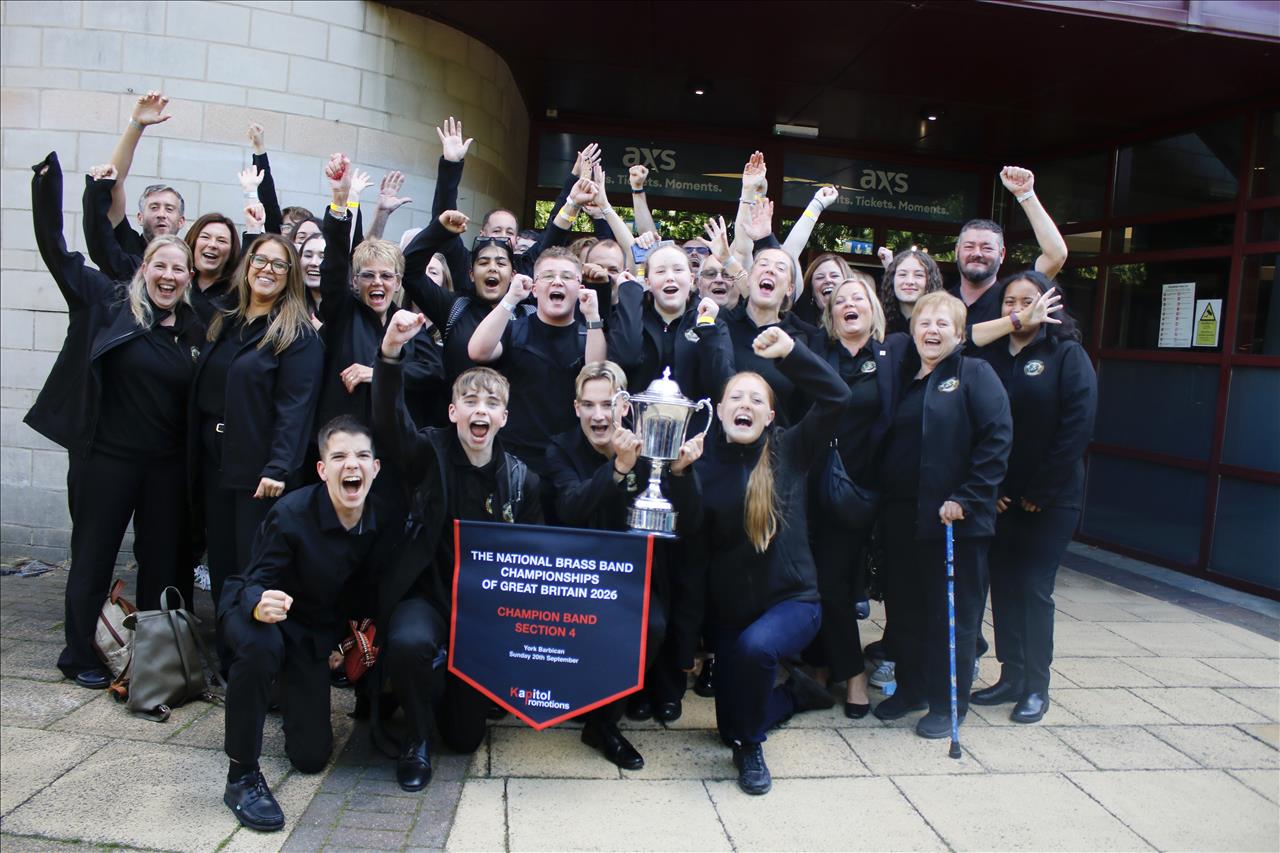
Valued winners: Wardle Community won the Fourth Section title
Valued
Competitors told 4BR that they felt valued; the high-quality video recordings by World of Brass, post-performance interviews and an engaging ‘in-house’ social media presence all adding to their rejuvenated National Finals experience.
Given the challenges that arose when the British Open moved the Spring Festival from Blackpool to Birmingham this year, it was a major success in more ways than one.
the move resulted in as welcome a feeling as finally leaving Cheltenham with the proceeds of a successful 100-1 bet in your back pocket.
There are still tweaks that could be considered on what are still two very long days, but the move resulted in as welcome a feeling as finally leaving Cheltenham with the proceeds of a successful 100-1 bet in your back pocket.
Bands are leaving Cheltenham with a winning bet
All that, and with visitor-friendly pubs and food outlets found within 5 minutes of the hall, the treasurers of the winning bands didn’t have to take out an overdraft to pay for celebratory drinks in the pricey bar after David Hayward (who once again added so much to the supportive atmosphere) announced them as champions.
Leave the Albert Hall
Could it finally signal the right time then for Kapitol to leave the Royal Albert Hall?
The optics there are arguably also plain to see – although a proud bloody-mindedness in maintaining a contest that for too long has focused on trying to revive past glories rather than exploring future opportunities remains in place.
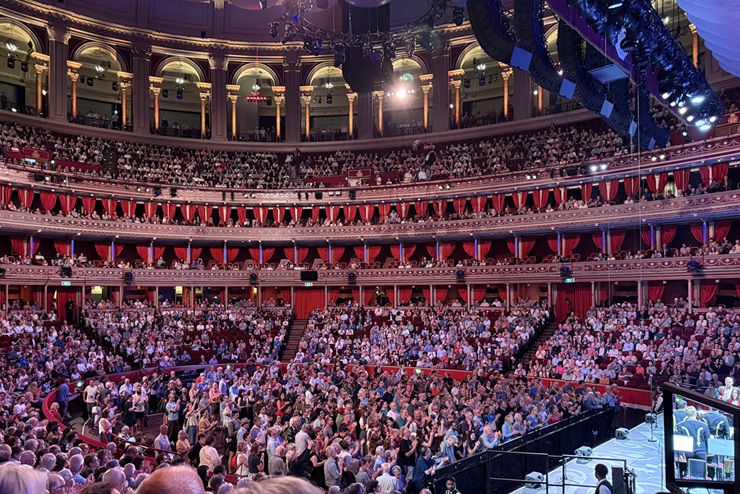
Wonderful reminder
Like Cheltenham Racecourse, the Albert Hall is a brilliant place to be when packed full of like-minded people - Black Dyke’s BBC Proms performance this year (above) a wonderful reminder of that. However, the days of National Final ticket touts and people sneaking up to the ‘Gods’ to hear their favourite bands perform are long gone.
the Albert Hall is a brilliant place to be when packed full of like-minded people - Black Dyke’s BBC Proms performance this year a wonderful reminder of that.
More pertinently though – they will never return.
Reality
The reality is that the audience for a major brass band test-piece contest in the UK is now around 2,000 people. They are also more ‘choice aware’ in their listening habits than ever before. The value of the ticket they buy has to offer much more than just a seat in a hall.
but then again neither has to fill 5000 seats to offset the immense bill of hiring the hall and other associated costs
With their central locations and modern amenities, the British Open and Brass in Concert Championships continue to do that – but then again, neither has to fill 5000 seats to offset the immense bill of hiring the hall and other associated costs (it’s believed the Albert Hall takes a cut of programme sales etc, whilst their own bar prices border on the astronomical).
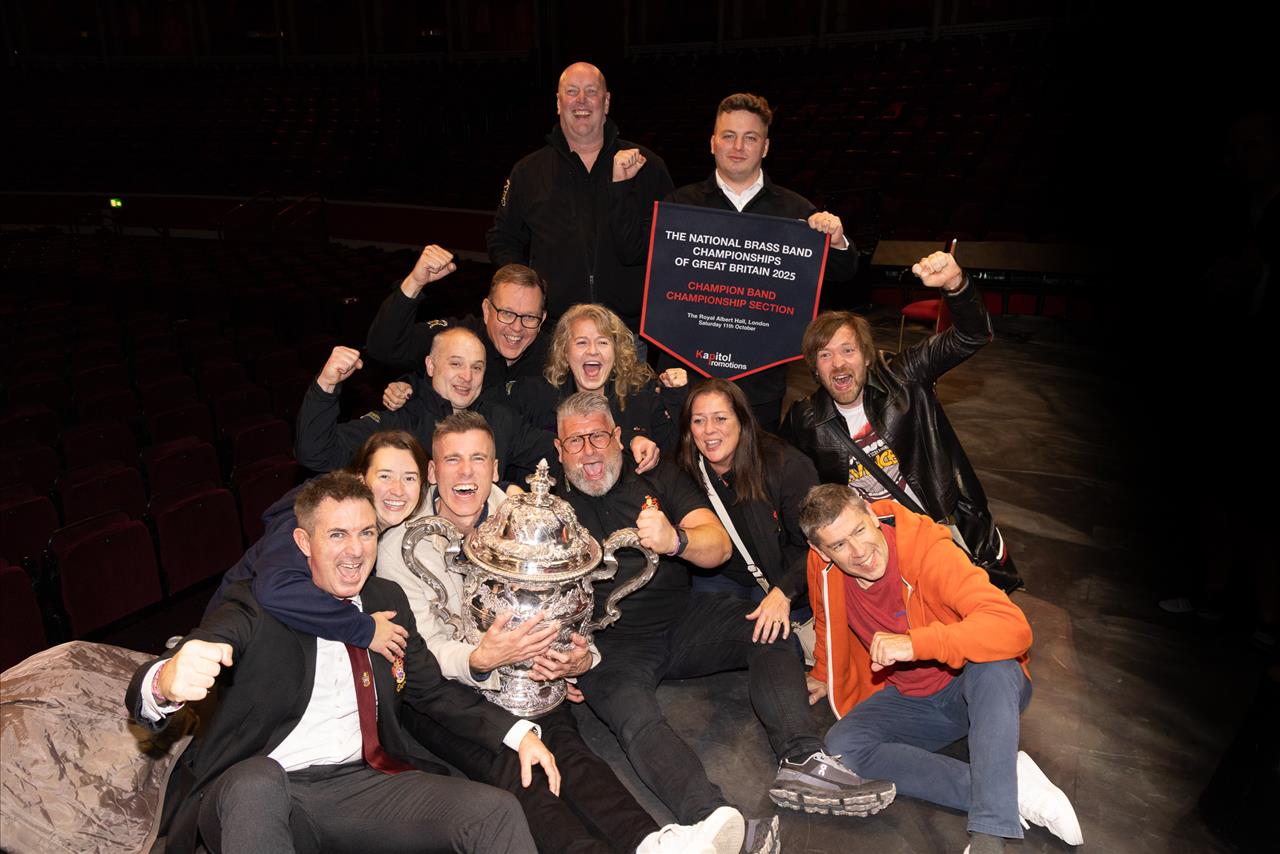
Prestige win: 2025 Champion Desford won £2,000 to go with the famous trophy
And for Kapitol, as well as for competing bands and the potential audience making the trip to Kensington, those costs are increasing almost exponentially. It may not justify why the top-prize of £2,000 hasn’t changed since 1980, but it does explain in part why the entry fee for the band that wins it is now about a quarter of its value.
the factors behind knowing when the time is right to change the location or even the format of a historically established event are numerous and fraught with danger – cost and reputation amongst them.
A move would therefore seem inevitable, but the factors behind knowing when the time is right to change the location or even the format of a historically established event are numerous and fraught with danger – cost and reputation amongst them.
Success and failure
Both the British Open (in 1998) and Brass in Concert (in 2005) can now look back with considerable justification on their decisions. Few would argue that they have not been successful in maintaining their prestige in their moves to Symphony Hall and The Glasshouse International Centre for Music (formerly The Sage). In doing so they have also been able to increase their prize money offers to competing bands.
On the flip side, the All England Masters never recovered after it changed its format in 2005 and ultimately its venue in 2010. The Spring Festival meanwhile is faced with re-establishing its credentials with both bands and listeners alike after its recent move.
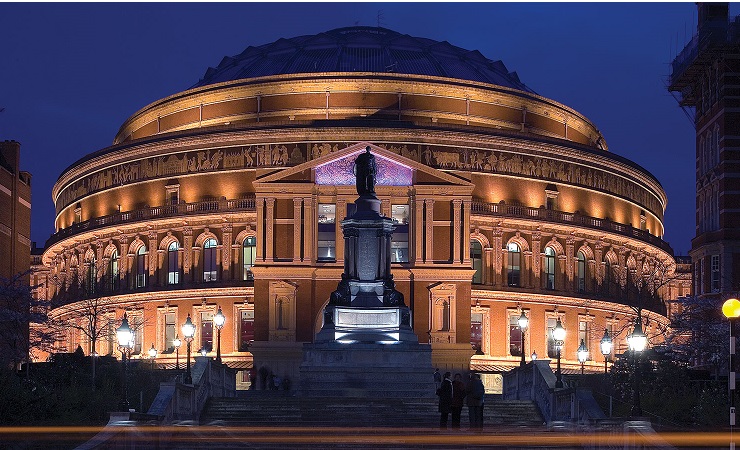
The ultimate performing ambition
Ambition
The Championship Section National Finals has been held at the Royal Albert Hall almost continually since 1945 (it had a short stay at Earl’s Court in 1952 and 1953).
There is a great deal of affection for what it represents to the banding movement. It also remains an ambition of many players to have just one opportunity to walk onto its stage to perform.
It also remains an ambition of many players to have just one opportunity to walk onto its stage to perform.
The cost of doing that though is quickly becoming prohibitive, as even those with the most rose-tinted view and passion for the event will perhaps realise when they look out into the auditorium on Saturday 3rd October and are met by a sea of red seats.
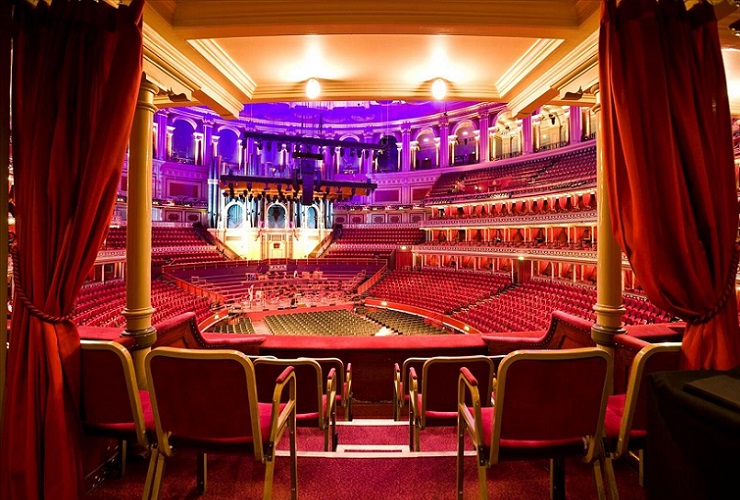
No easy decision
It may seem an easy decision then, but it is anything but. Opt for the wrong venue (permanent or on rota around the country), and even a potential audience of 2,000, many of whom come to the Albert Hall as their ‘one-off’ yearly banding day out, may be diminished further.
Kapitol’s Philip Morris has done a remarkable job in persuading the Royal Albert Hall’s management that the National Final remains on what has become an increasingly commercially driven schedule of events, especially after the cost implications left by Covid and the recent dispute over the resale of seats at ‘non-exclusive’ events.
in the end it will be the accountants rather than romantics who decide what the future holds.
As ever in today’s world of financial constraints, perhaps a few minor tweaks to the day will delay things, but it in the end it will be the accountants rather than romantics who decide what the future holds.
Any sense of loss of prestige will be keenly felt of course, but it will surely be offset if like the 1-4 National Finals, a new home is found that provides the foundation on which a new sense of rejuvenation can be injected into the British banding movement’s flagship event.
Iwan Fox