
The National Youth Brass Band of Great Britain
Conductor: Dr Roy Newsome
NYBB001
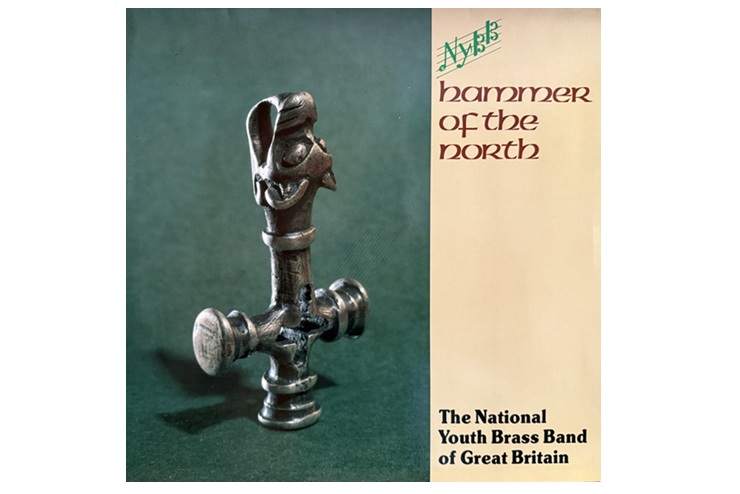
As Dr Roy Newsome says in the cover notes to this 1988 recording - ever since its first course in 1952, the National Youth Brass Band of Great Britain has existed not only, “to provide opportunities for young people to play brass band music to the highest possible standard”, but also to introduce them “to works which many would not otherwise encounter”.
That approach has certainly been reinvigorated in recent years as Director of Artistic Planning Dr Robert Childs (soon to be followed by Philip Harper, whilst orchestral conductor Martyn Brabbins has since become President) broadened horizons after a period of somewhat conservative programming and exploration.
Liberal minded
Initially, a more liberally minded outlook was first introduced in the 1960s, although it was the NYBBGB's Scottish counterpart that first commissioned original works by Malcolm Arnold, Thea Musgrave, Thomas Wilson and Bryan Kelly.
By the 1970s, the NYBBGB (which had by now gained some Arts Council support) was able to commission the likes of Wilfred Josephs, Paul Patterson and Richard Steinitz.
By the 1970s, the NYBBGB (which had by now gained some Arts Council support) was able to commission the likes of Wilfred Josephs, Paul Patterson and Richard Steinitz, and by the time of this recording in August 1988 at BBC Studio 7 in Manchester, works by Richard Rodney Bennett, Philip Wilby and others were on the horizon.
Dramatic
Here though was Michael Ball’s imposing ‘Hammer of the North’.
Written earlier in the year, it’s a dramatic, hugely characterful composition that opens with the sound of a metaphoric Thor-like pagan hammer smashing its way into the lives of the people of the North of England.
Informed by a re-evaluation of Viking history the stereotypical imagery is eschewed by the composer within a taut, vibrantly coloured score.
Informed by a re-evaluation of Viking history (Ball references a book written by author and television presenter Magnus Magnusson) the stereotypical imagery is eschewed by the composer within a taut, vibrantly coloured score.
The initial brutality in conquest gives way to a more considered appreciation over four linked sections of craftsmanship and exploration, storytelling and artistry, in a final section of elegiac heroism.
It’s a very fine work, captured with acute appreciation of balance by producer Paul Hindmarsh and engineers Harold Barnes and Gavin Fuller (respected figures at the BBC at the time), and performed with visceral panache.
Counterpoint
Elsewhere, Gilbert Vinter’s 1965 work, ‘Triumphant Rhapsody’ offers a fine original counterpoint (again with excellent solo and ensemble playing), whilst Frank Wright’s arrangement of ‘Prelude to The Mastersingers’ showcases traditional brass band virtues under the paternal care of Dr Roy Newsome.
the Eric Coates march ‘Youth of Britain’ from 1944 speaks of an age of bright youthful optimism imprisoned by the limited horizons of post war personal exploration, national service and rationing.
Bram Gay’s clever appreciation of Elgar’s rather whimsical ‘Nursery Suite’ brings further accomplished stylistic playing, although the Eric Coates march ‘Youth of Britain’ from 1944 speaks of an age of bright youthful optimism imprisoned by the limited horizons of post war personal exploration, national service and rationing.
Unfortunately, although there are some black and white images that adorn the back sleeve, there is not a single mention of any of the players that performed on the recording – a rather clumsy omission of opportunity that today’s NYBBGB ethos thankfully ensures isn’t ever repeated.
Iwan Fox
Side One:
1. Triumphant Rhapsody (Gilbert Vinter)
2. Hammer of the North (Michael Ball)
Side Two:
1. Prelude to The Mastersinger (Wagner arr. Frank Wright)
2. Nursery Suite (Edward Elgar arr. Bram Gay)
3. March: Youth of Britain (Eric Coates arr. Denis Wright)