
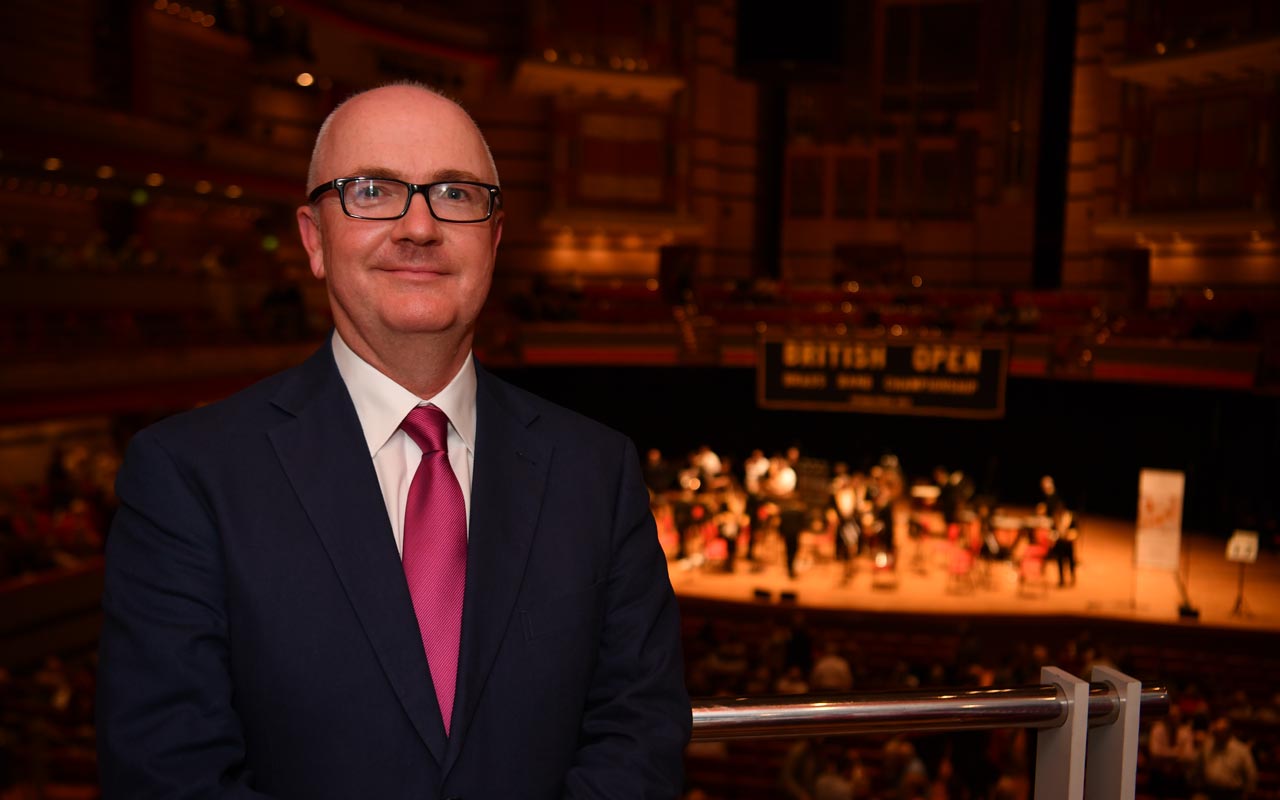
The heroic composer - Peter Graham
Although recently appointed Prime Minster Andy Burnham is keen to reinforce his appreciation of all things ‘Northern’, it would still come as a surprise if he popped into York Barbican on Sunday morning to enjoy the performances of the 16 bands in the Fourth Section National Final.
That said, he would miss a treat as they tackle Peter Graham’s cleverly constructed test-piece, although his ‘Heroes of the North’ are not local cultural icons such as composer John Barry, actor Dame Judi Dench or even poet W.H. Auden, but brass band pioneers from further ashore.
Nordic focus
His focus is on the Nordaland region of Norway around the city of Bergen, which has been the hub of brass development in the country for close on 50 years.
The piece (about 10 minutes long) was commissioned by Henning Annundsen for the Skodvin Skulemusikk and celebrates figures central to that remarkable rise.
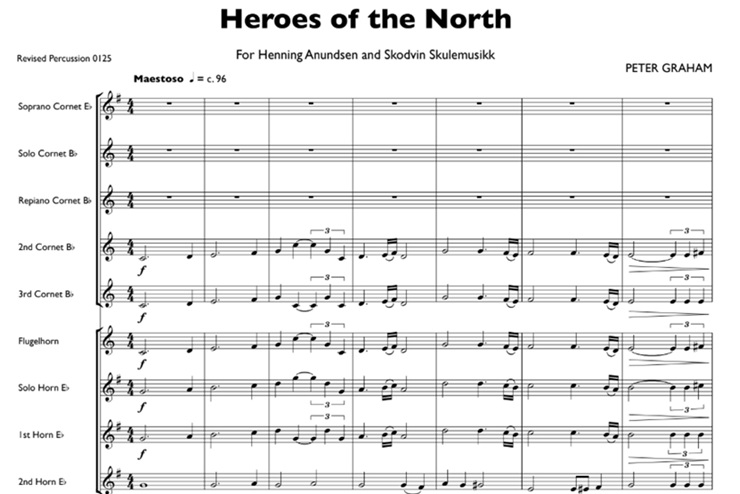
Character variations
These linked ‘character variations’ follow a majestic introduction based on an opening motif built on the first five notes of the scale any brass player tries to master – C, D, E, F & G.
From there we are led through the neatly observed portraiture, starting with Tom Brevik (one of the key people behind the musical development of the Norwegian movement).
He’s captured in a playfully optimistic, but not whip-cracked, ‘Galop’ (marked 120), with its hints of light touch Gordon Langfordesque optimism and lyricism.
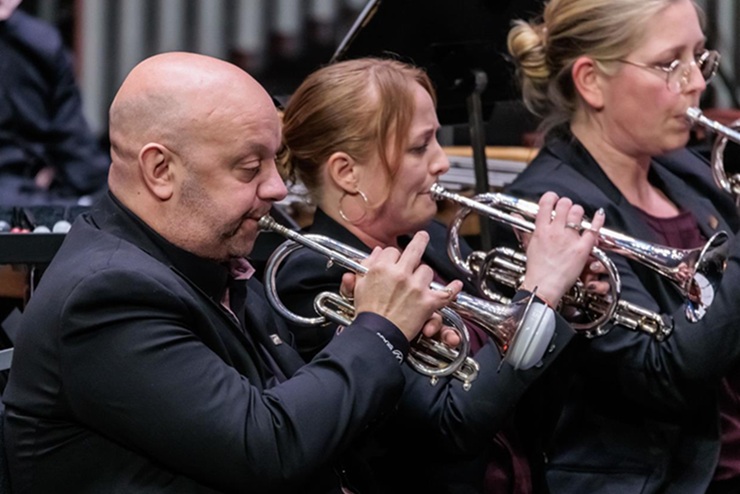
Next up is Frode Rydland (above- the renowned former soprano star with Eikanger Bjorsvik Musikklag) who is represented by a pastiche Mazurka homage to Grieg’s ‘Anitra’s Dance’, mercurial and delicate.
Led by the sop, it flows in 1 in a bar quirky elfishness (a bit like the man himself).
Slow walk
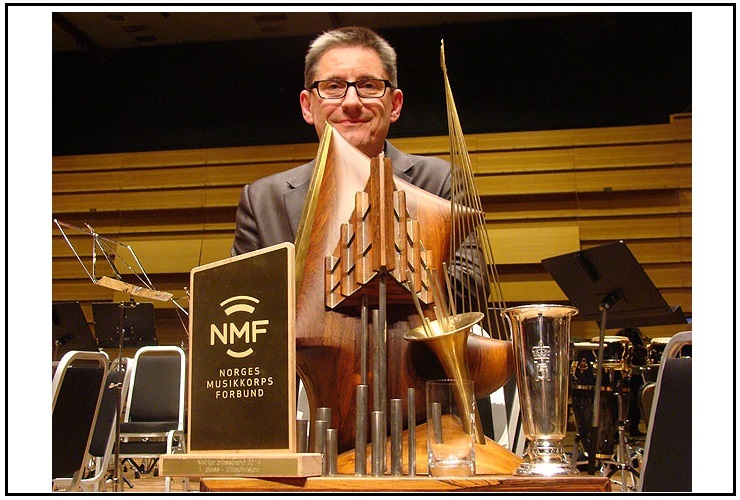
Contrast comes with the urbane cool of ‘The Bjorge Walk’ – a nod of respect to Viggo Bjorge (below- Eikanger’s indefatigable administrator), as it slowly meanders with Bernstein infused intent just like his band’s famous slow contest stage walk.
Snell finale
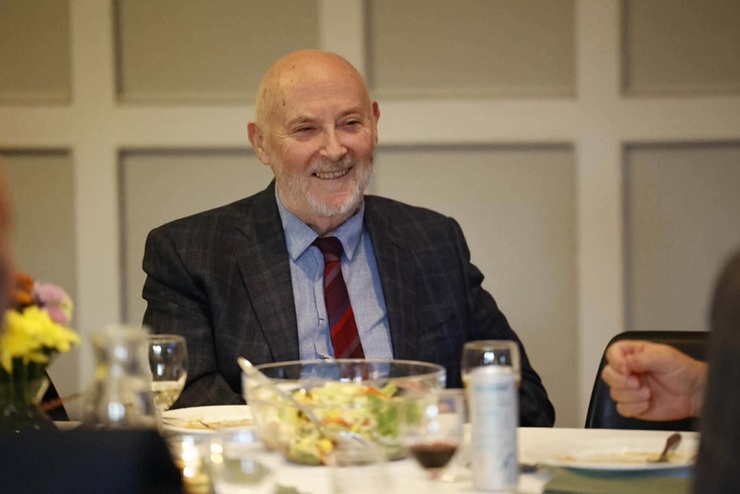
The figure of Knut-Harald Rydland (‘Mr Skodvin Skulemusikk’) is found the musical cipher of the following tender ‘Hymn’, before the work is rounded off by a Khachaturian inspired tip of the hat to Howard Snell (below).
It’s rather appropriate that the finale is called ‘Maestro Snell’s Russian Adventure’ as the music drives forward in controlled excitement and a final climb up that opening five-note motif to the last chord.
Arguably the man who imbued Norwegian banding with the essential form of contesting and artistic self-belief that now sees it as one of the world’s leading brass banding nations he recently enjoyed an early 90th birthday celebration in Bergen with friends.
It’s rather appropriate that the finale is called ‘Maestro Snell’s Russian Adventure’ as the music drives forward in controlled excitement and a final climb up that opening five-note motif to the last chord.
Problem solving
Although there have been a few grumbles about minor errata and score inconsistencies (the percussion writing was revised in 2025), any problems of style, notation or directive should have been easily solved by the MDs.
Simple as that may seem, conductors would do well to also pick up on the wise words of adjudicator Martyn Brabbins and his colleagues David Hirst and Arsene Duc at the recent British Open Championship – all three of whom spoke of impressing through musical insight rather than technical virtuosity.
Simple as that may seem, conductors would do well to also pick up on the wise words of adjudicator Martyn Brabbins and his colleagues David Hirst and Arsene Duc at the recent British Open Championship
This is music well within the capabilities of these bands – the style, pacing, dynamics and balances, clearly laid out to provide a framework for expression.
That said, so too was ‘Music of the Spheres’ last weekend, and still some MDs couldn’t resist ignoring the basics: Stephanie Binns, Nicholas Garman and Stephen Pritchard-Jones will be waiting to be impressed in the box.
The qualifiers
The 16-band field (the smallest since the Covid struck 2019 event) is full of potential winners, with a number of excellent qualification performances heard around the country earlier this year.
No region has dominated at this level for some time either, with the last of the ‘four in a row’ winners from Wales coming in 2016.
No region has dominated at this level for some time either, with the last of the ‘four in a row’ winners from Wales coming in 2016.
Since then, Scotland has won twice (including last year with the excellent Arbroath & Carnoustie), Midlands (2018 & 2023), North (2019), West (2021), North West (2022) and London & SC (2024).
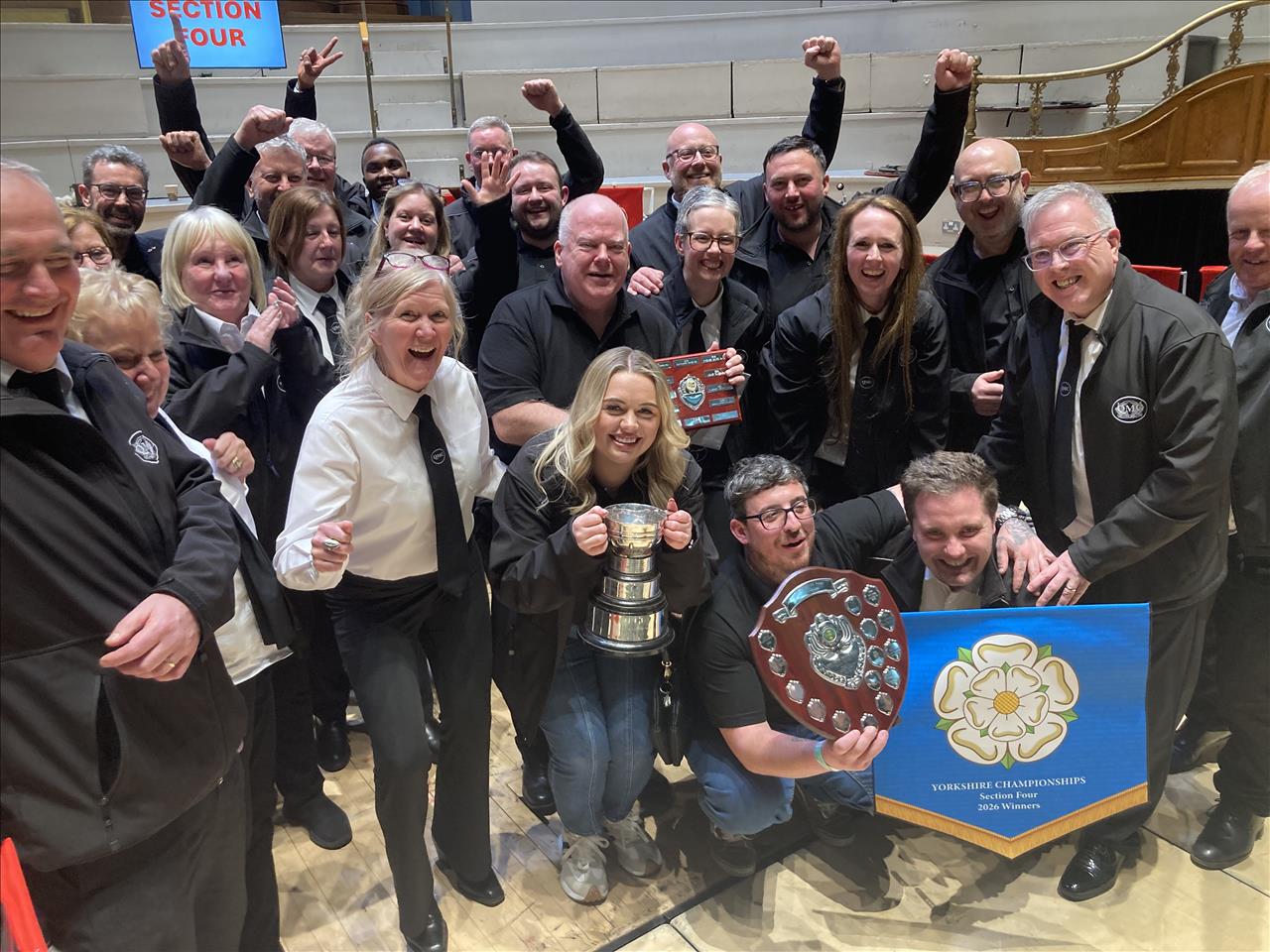
Can Queensbury end the Yorkshire drought?
Yorkshire challenge
Only Yorkshire has failed to make a winning mark in the last decade or more (you have to go back to 2006 with Dodworth), so both ‘double’ Area winner Queensbury Music Centre (above - runner-up last year in Cheltenham) and Garforth Brass, who return to the finals for the first time since 2018, will be looking to pose a strong challenge for honours.
Those making the long haul in the other direction though are the in-form West of England Champion Pendennis Brass from Falmouth in Cornwall
Hopes of a successful Scottish title defence fall on the shoulders of Bon Accord B (whose journey from Aberdeen is thankfully shorter this year than on their last appearance in 2024 when they came 3rd) and Coalburn Intermediate from South Lanarkshire, who are proudly making their National Final debut.
Those making the long haul in the other direction though are the in-form West of England Champion Pendennis Brass (below) from Falmouth in Cornwall (winners on their last four contest appearances) of and debutants Shaftesbury Town from Dorset.
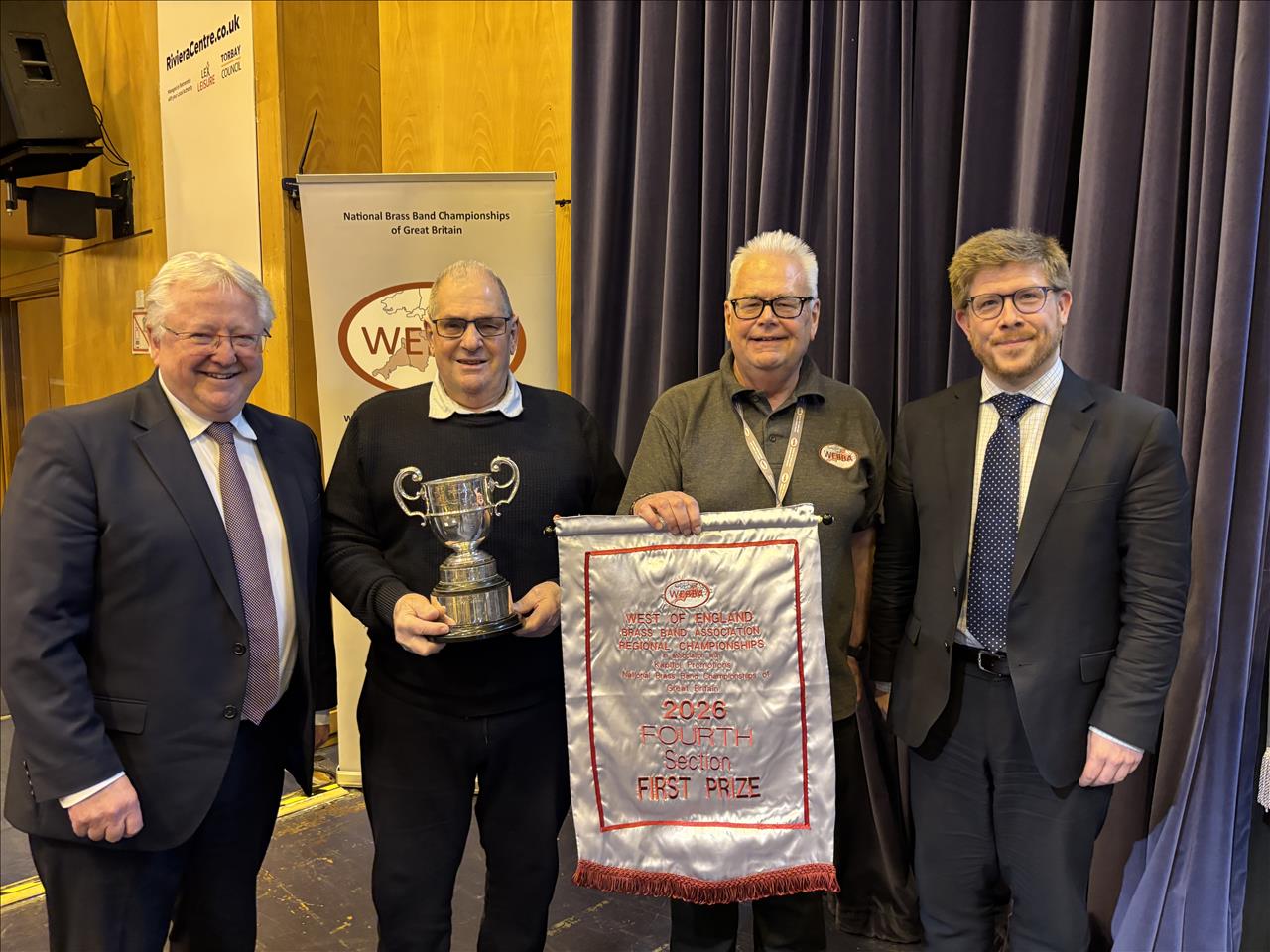
Pendennis are one of the form bands heading to York
Southerners
A trio of southern bands hoping to return as ‘Heroes of the North’ are London & SC qualifiers, Crystal Palace (finalists for the first time in a decade), Brighton & Hove City Brass (last appearance in 2014) and City of Oxford (who came 5th at Cheltenham last year).
Midlands hopes rest with Area Champion Cubbington Silver (making their first appearance since 2015) and the in-form Matlock who will be looking for a fifth consecutive contest podium finish as their take their first finals’ bow since 2008.
Strong challengers
The North West traditionally sends strong challengers to the National Final, with hopes this year resting with debutants Wardle Community and Brindle who last appeared in 2017.
4BR will be in York for the weekend to cover the event but on this occasion is unable to provide live band by band coverage due to family commitments
The two smallest regions will send a trio of strong contenders, with North of England Area and Red Admiral Champion Driffield Silver making their debuts alongside Swinton & District Excelsior who take to the National Final stage for the first time since 2014. The sole Welsh representative is Gwaun car Gurwen, back to represent the nation for the first time since 2019.
4BR will be in York for the weekend to cover the event but on this occasion is unable to provide live band by band coverage due to family commitments. The draw and results will be posted on the site as soon as possible with full news reports.
Iwan Fox
Fourth Section:
Test piece: Heroes of the North
Adjudicators: Stephanie Binns; Nicholas Garman; Stephen Pritchard-Jones
Sunday 20th September
Draw: 7.45am
Start: 9.00am
Bon-Accord B (Harry Marshall)
Brighton & Hove City Brass (Rom Stanko)
Brindle (Stephen Hartley)
City of Oxford (Douglas Brown)
Coalburn Intermediate (Gareth Bowman)
Crystal Palace (Jim Lynch)
Cubbington Silver (Mark Scott)
Driffield Silver Peter Kench)
Garforth Brass (Gordon Eddison)
Gwaun Cae Gurwen (Alex Parker)
Matlock (Chris Banks)
Pendennis Brass (Harry Weir)
Queensbury Music Centre (Alan Hobbins)
Shaftesbury Town Silver (Martin Hill)
Swinton & District Excelsior (Stephen Hague)
Wardle Community Band (Jane Conway)